
Three legs and an electronic brain: how Ferrari Hypersail will fly (Pt. 2/7)

Foils, a flapped keel and a rudder with ideas of its own – plus a flight controller born in Maranello's road cars. Andy Rice gets up close with the appendages.
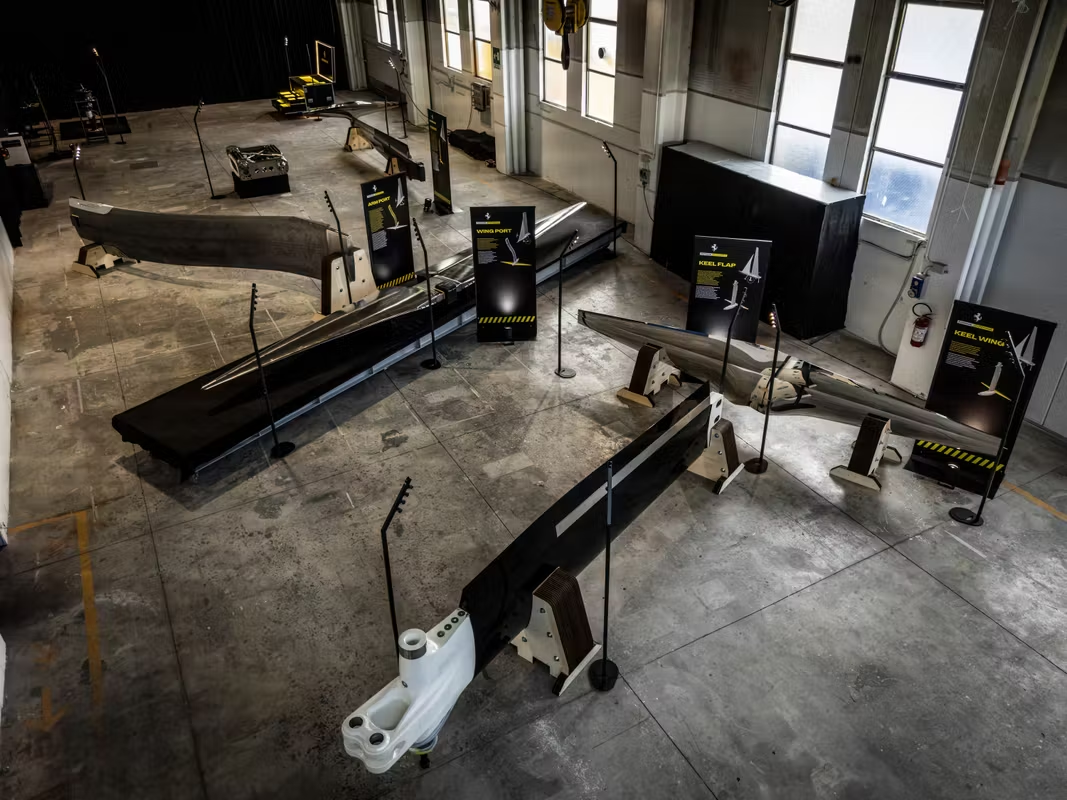
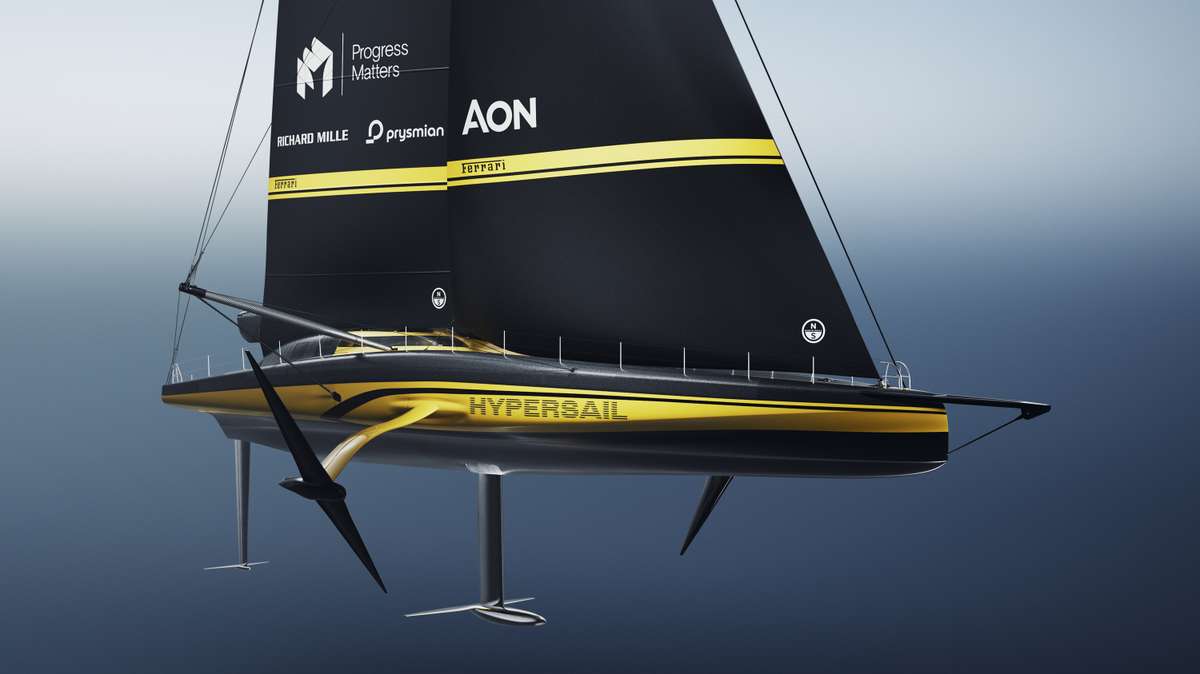
If the hull is the body of Ferrari Hypersail, the appendages are its legs. When I was at the construction yard in Pisa, they were laid out in a separate building like parts of a giant insect – the first of each, straight off the production line.
They are the reason the boat can fly. They are also where Ferrari has taken its biggest risks.
Three points of contact
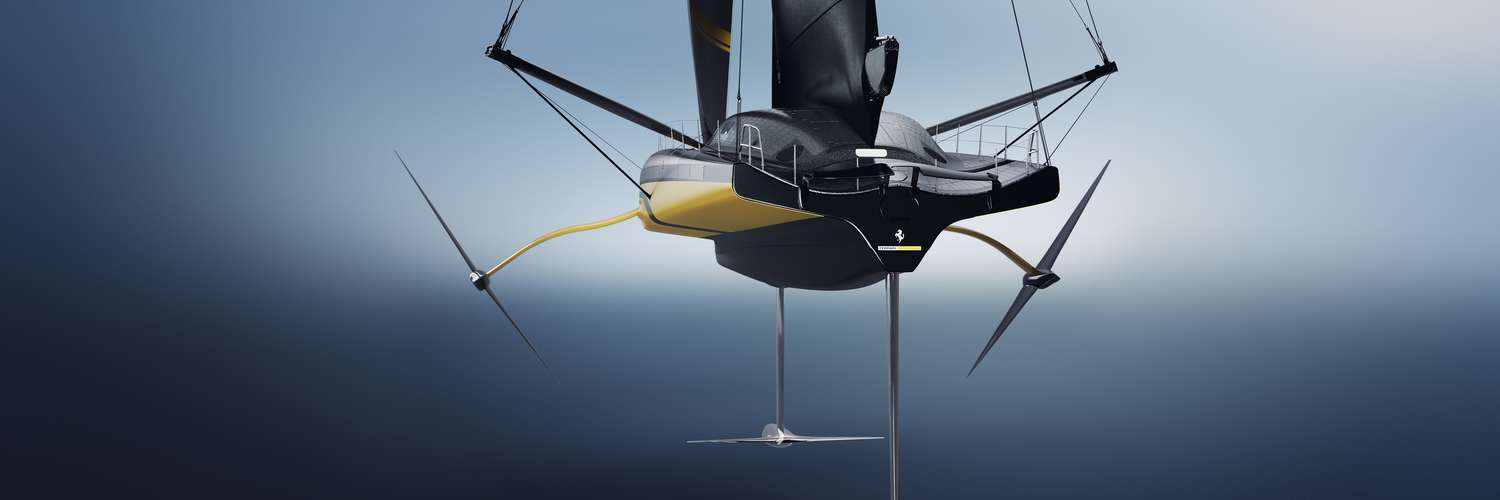
Matteo Lanzavecchia describes the boat as standing on three "legs": the foils, the keel and the rudder. Between them they form three support and control points that keep a 100-foot monohull stable once it lifts off the water.
The foils are the side wings. Each foil wing is 8.7 metres long, and their job is the obvious one – generate enough lift to raise the hull clear of the sea, kill the drag and let the boat reach its target speeds. Each has two flaps. When the boat comes into harbour, the foil arms retract three metres on each side.
The keel is where things get unusual. This is not a fin with a lump of lead on the bottom – although there will be a lead bulb weighing several tonnes, which was missing when I visited. Built into the keel is a foil with its own movable flap. That turns the keel into the third lifting point, adding stability in flight. The keel cants up to 35 degrees to windward or leeward, driven by two huge hydraulic rams working in tandem. Deployed vertically, it draws 9.5 metres.
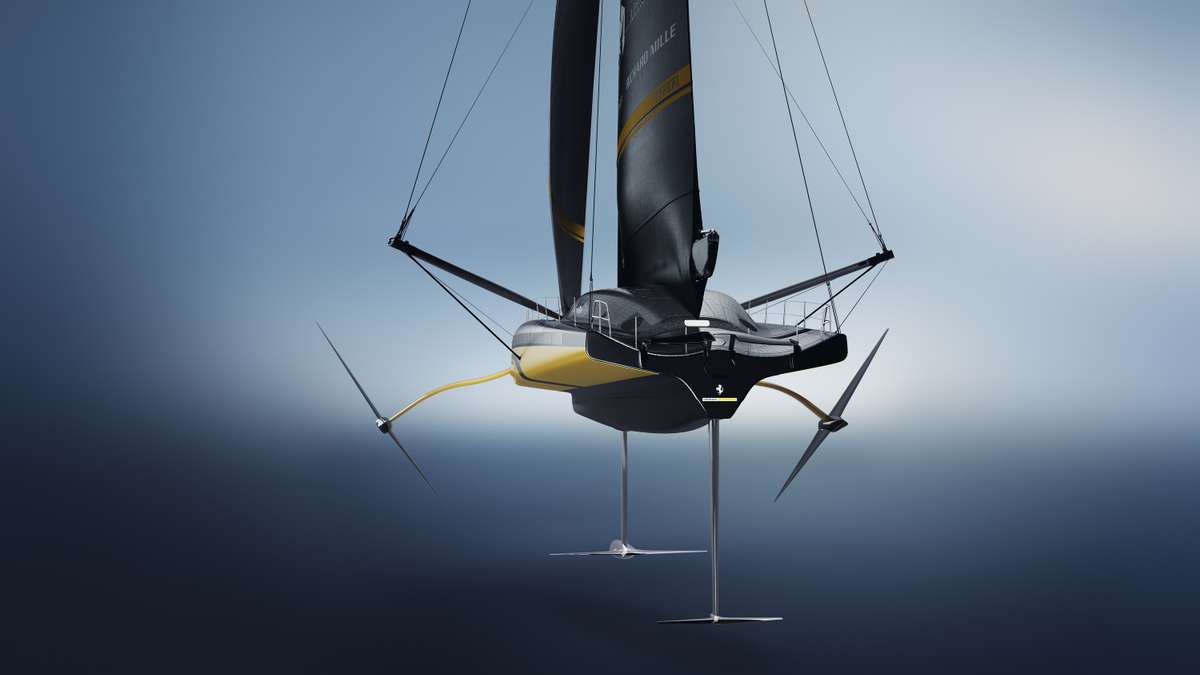
The rudder does more than steer. It has a small movable flap on its vertical section, making constant micro-adjustments to hold the target heading. It is built in two materials: carbon fibre at the top and stainless steel lower down. At low speed the whole rudder turns. At high speed, only the flap does the work.
Add it all up and there are seven control surfaces across the appendages, all working together to create and manage lift.
I asked whether the team had considered twin rudders, like the ones on the Ultim trimaran Gitana 17. They had. But in the simulator, a monohull in flight behaved differently enough that a second rudder did not make sense.
Titanium skin on carbon wings
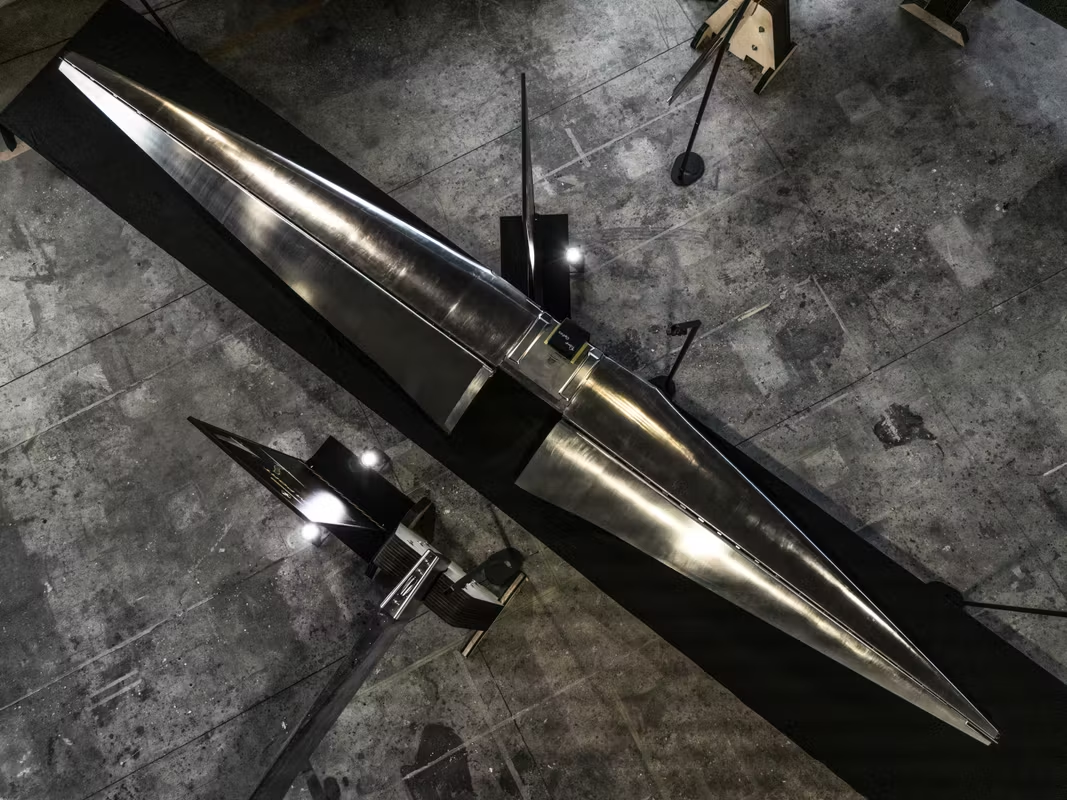
Look closely at the foil wing and you see a mix of materials. The main structure is carbon. The flap is titanium. And the whole carbon core is wrapped in a titanium skin just 0.6 millimetres thick.
The reason is cavitation. At speeds close to 50 knots, the pressure on the foil surface can drop so low that the water starts to boil. Those tiny bubbles collapse violently, pitting the surface and destroying the smooth flow of water across the foil. The titanium takes that punishment. The carbon keeps the weight down.
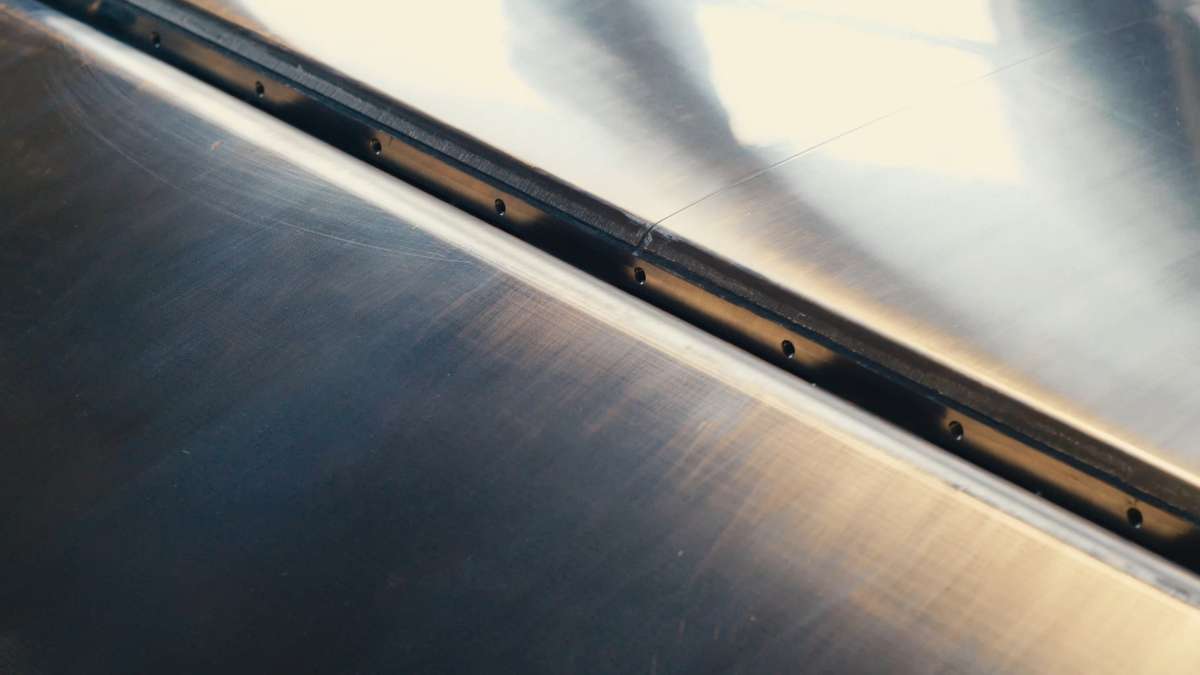
The team says this approach has not been done at this scale before. In the highest-load areas – the foil arms and the mainsail traveller – carbon and titanium are layered together in a sandwich, an idea borrowed directly from Ferrari's sports cars.
There is also something you cannot see. Fibre optic sensors run through these parts to measure how they bend under load. That data will tell engineers exactly how the structures behave once they are in the water.
Flight Control: the central nervous system
Hardware is only half the story. The other half is Flight Control, the electronic system that runs the boat's flight. It comes straight out of Ferrari's experience with car electronics and dynamic control – the same know-how used in the F80 and the Ferrari Luce.
It works in three stages. First, a network of sensors around the boat measures the sea state and the movement of the hull. Second, an onboard computer analyses the data and calculates the corrections needed. Third, actuators – mechanical arms and pistons – move the foils and flaps to balance every change in the boat's attitude. It looks at wind, waves, speed and heel angle, and it adjusts the trim in real time.
The power for all of this is serious. A hydraulic pump moves between 60 and 90 litres of fluid per minute at 350 bar.
Technical Team Leader Marco Ribigini explained the balancing act the software has to manage. To go fast, you want the boat high, so less of it is in the water. But you also want the hull low, so air does not rush underneath it. Holding that window is the flight controller's whole job.
The sailors still sail
Ferrari is clear that this is not a self-driving boat. The crew remains in charge. The automation handles the tasks a computer does better – thousands of tiny trim corrections – so the sailors can focus on reading the sea, making strategic calls and pushing for performance.
There is a direct line here to a sports car, Ferrari argues. Both need maximum aerodynamic efficiency. Both need electronics that sense and correct the vehicle's behaviour. The same simulation tools, airflow analysis and stability software that keep a Ferrari on the road are now being used to keep a boat in the air.
Of course, flight takes energy. And Ferrari Hypersail has no engine and no fuel. In Part 3, I look at how the boat plans to power itself around the world.
Topics
Articles You Might Be Interested in
From partners to opponents: inside the North Sails–Team New Zealand patent battle
Django 7X edges out Balthasar for Rolex Middle Sea Race overall win
Grigio and Giallo: Up close with the finished Ferrari Hypersail hull (Pt. 1/7)
Inside the Batmobile: a first look at Ferrari Hypersail
Batteries, foils and LiDAR: where does the sailor’s job end?
Why pro sailors dread the Middle Sea Race - Course Preview
The week in racing - 12 Oct ’26



Member Discussion