
Why refereeing SailGP is just getting harder

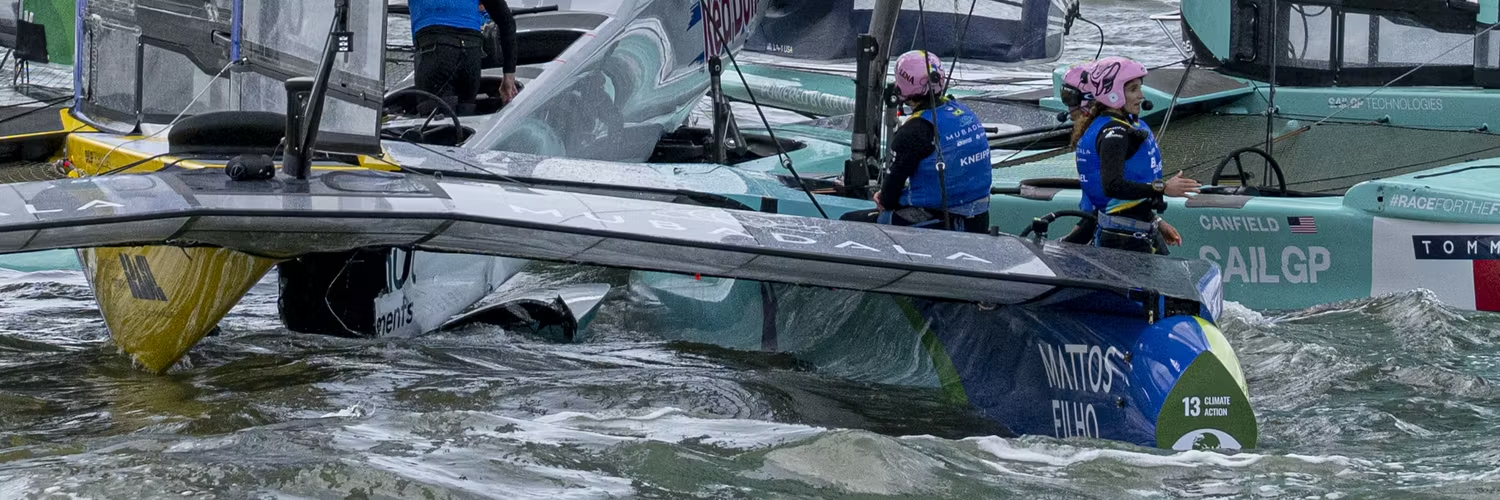
Chief umpire Craig Mitchell and his team of online adjudicators have been busier than usual this season of SailGP, partly because there are now 13 teams competing on what are often very congested race courses.
“We’ve been looking at anywhere between 70 to 90 incidents per race weekend and that doesn't include the practice sessions so it’s been pretty busy so far in the umpire booth.”
That umpire booth exists in Ealing in West London, so Mitchell never gets to see the action live on the water, even when it’s just down the road for the forthcoming British Sail Grand Prix in Portsmouth next weekend.
Mitchell and his team come under immense pressure to make almost instantaneous judgments on who’s in the right and who’s in the wrong in any collisions or crashes between the boats. Resolving the rights and wrongs of these situations is often hard enough even with the benefit of hindsight and a time to take stock, let alone within seconds of the incident occurring.
The Foil got a chance to catch up with Mitchell earlier this week and ask him what the biggest headaches had been from the season so far.
Auckland and New York Incidents
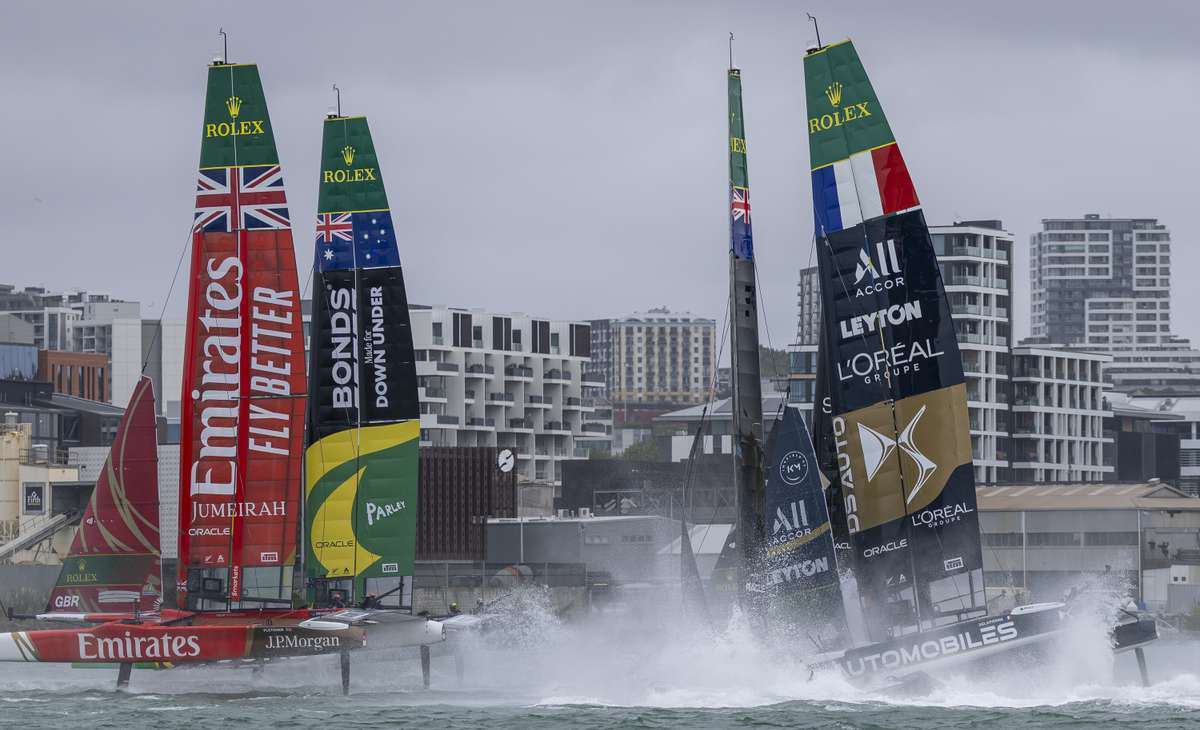
“We had two major headaches this year. The first headache was down in Auckland with the incident between New Zealand and France. That led to quite a long review meeting - about two hours - where we went through all the data to work out exactly what happened, when, and where.
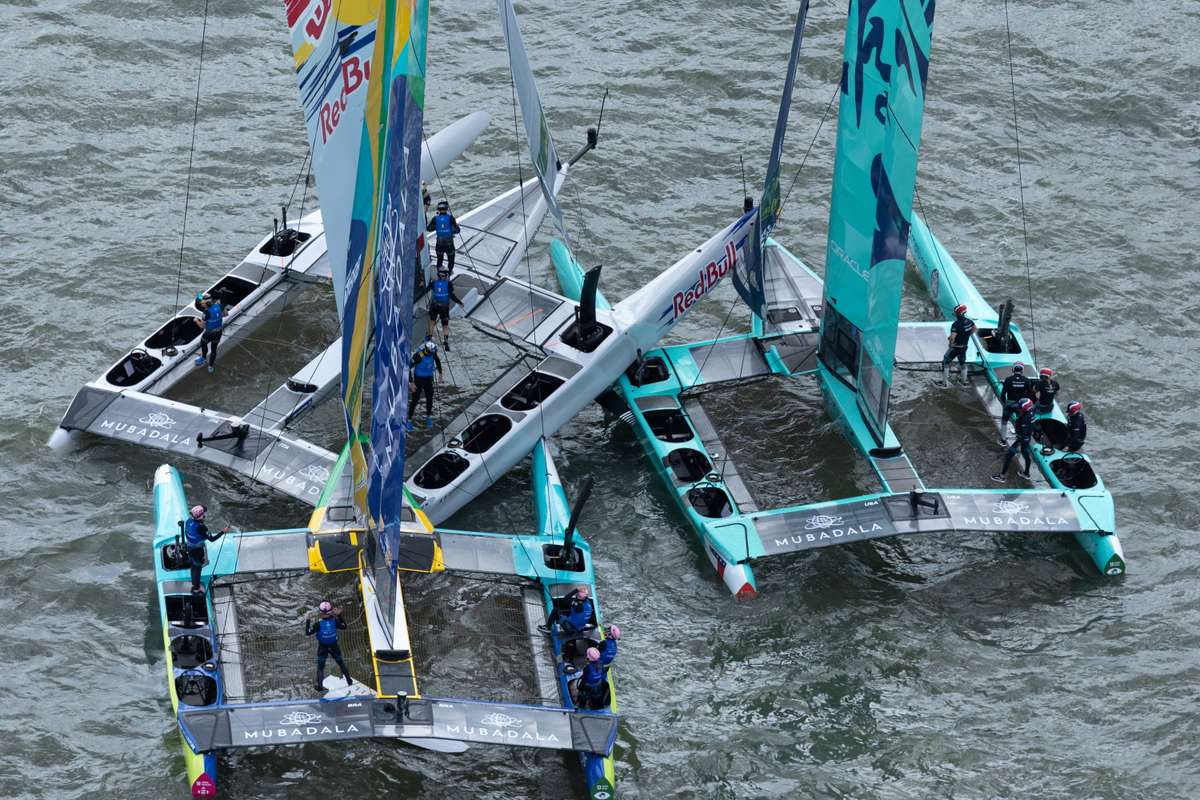
“The New York incident between the US, Italy, and Brazil was also a very long review meeting where the teams presented their data and their opinions. Ultimately, we have an incident, make a call on the water, and then follow our process to discuss what happened and why - focusing on who could or couldn't have avoided a collision - and make our decisions from there.”
Re-evaluating the rules
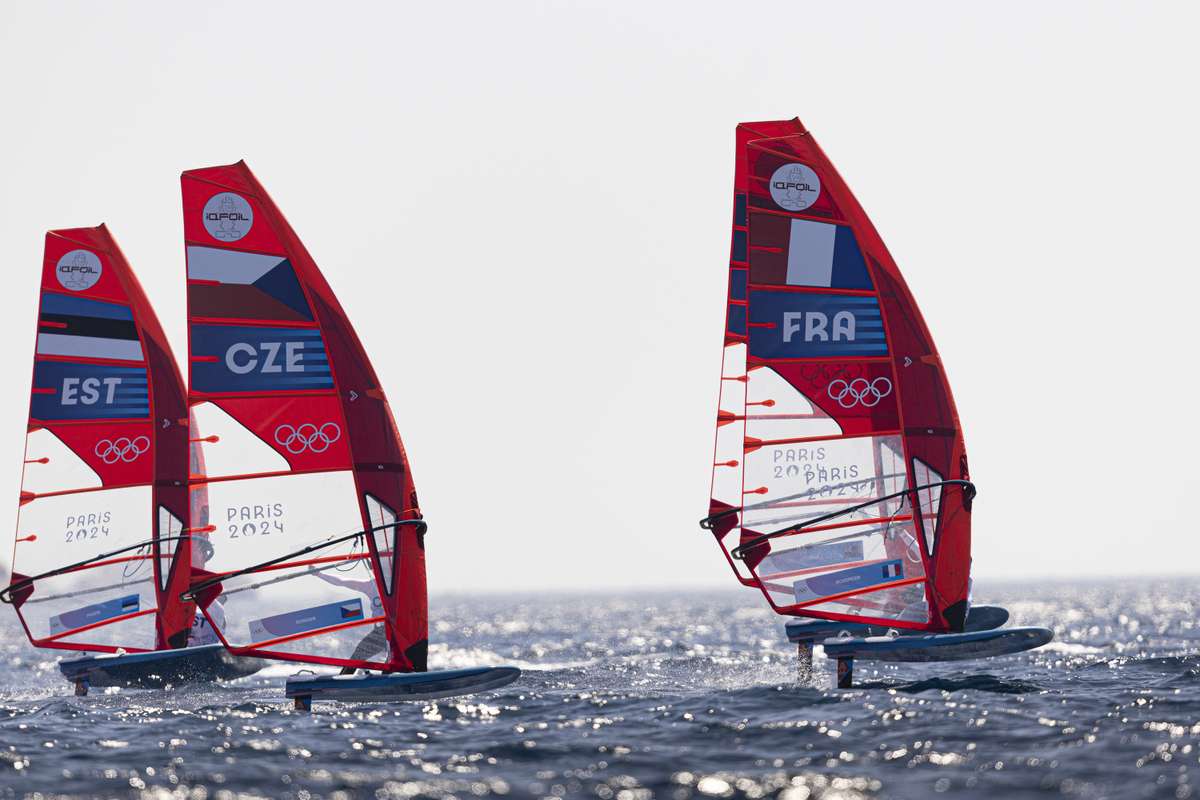
A few weeks ago after the three-way collision on the New York start line between Italy, Brazil and the USA, at The Foil we asked the question about whether the starting amendment already being used by the Olympic windsurfing class, the iQFOiL, as well as the wingfoil racers, would be an appropriate alternative for SailGP to explore.
Mitchell replied: “There are ongoing discussions about what should be done to avoid collisions, and we hope to get more feedback on keeping everyone safe from the Athlete Safety Forum. We are looking at whether the rules are fit for purpose.
“I’ve looked at the windsurfer rule at the start line, where you can't luff above a proper course, but it is not as straightforward as it first seems. I'm not convinced it would help much within SailGP because of the dynamics of the boats. When you have two-meter-long windsurfers accelerating, decelerating, and quickly changing course, that rule potentially fits them. However, I’ve never actually heard of anyone being penalised or protesting for breaking it; generally, the rule is just there as a guideline.”
Mandating a dedicated lookout
“Our main reaction coming out of New York was to mandate that teams must have someone keeping a good lookout at all times. Time and time again, when incidents happen with serious damage, we see that at some point somebody wasn't watching where they were going. That was very much the case with this incident, which was the result of a series of events:
- Tactical hesitations: We often see a windward boat avoid taking action against a leeward boat because they know if they get a penalty, the leeward boat will probably go straight, pull ahead, and wash the penalty off.
- The New York setup: Italy was early because they were being chased by the Swiss, and there was tide behind them. They made a turn to avoid going over the start line, right as another team was trying to get on the foil and get going.
- Reduced crew size: We reduced the crew down to five for that race. That meant we lost the dedicated strategist role - which we actually introduced after the Season 2 incident between the USA and Japan when people weren't paying enough attention.
- A lookout: “Because they all came together, and quite a bit of it was due to people not watching where they were going, we have now mandated that you must always have someone (one person behind the driver) keeping an eye out below to keep everyone informed. Introducing this should remove the need to start being more prescriptive about proper courses. I did look at whether we should have a rule within a certain range. We could make it data-driven: define your course to the mark, establish a maximum tolerance (say 10 or 20 degrees), and automate a penalty. But I'm not sure if that would actually help.”

Data-driven penalties vs motorsport rules
With the F50s travelling so much faster than the vast majority of sail-powered craft which compete under the Racing Rules of Sailing, is a more radical approach to the rules required?
Mitchell commented: “Overall, when talking about high-speed racing, it is worth looking at whether we need to transition to more motorsport-style rules. The main reason we have these incidents is that somebody does something unexpected. On a motorsport track, when you get to a corner, you know everyone is going to turn left or right. Here, there are multiple options, and that is where we get into trouble. We need to work out how to get teams to better anticipate those options.
“The coaches have access to the UMPAP (Umpire App), so they have a significant responsibility to warn teams about developing situations. This will be an interesting learning curve for the teams and their communication systems. Because the UMPAP sits about a second behind reality, coaches must deliver their information well ahead of time to be useful. Ultimately, there simply needs to be more communication and a closer eye kept on what is happening around the boat.”
Increasingly, the word ‘Anticipation’ is coming up as the guiding principle in SailGP, and is a departure from the standard Racing Rules of Sailing. This is a topic we’ll be coming back to in future articles and podcasts on The Foil.
The pace of change in SailGP, as ever, is happening at a pace the sailing world has never seen before. Craig Mitchell’s headaches are not going to go away quite yet, although he wouldn’t have it any other way.
Topics
Articles You Might Be Interested in
Freddie Carr: Why Pensacola could change SailGP for good
Emirates GBR and Team 14 claim first slots on SailGP’s Pensacola training F50

SailGP’s year-round training base is about to open for business
American Express secures title rights to SailGP's Hong Kong opener
The RC44: how Russell Coutts hit a winning formula

The Foil Debrief: Five more knots and Geneva would be the best event on the circuit
Los Gallos snatch Geneva from the Flying Roos
Five races, five winners on day one of SailGP's Geneva drift



Member Discussion