
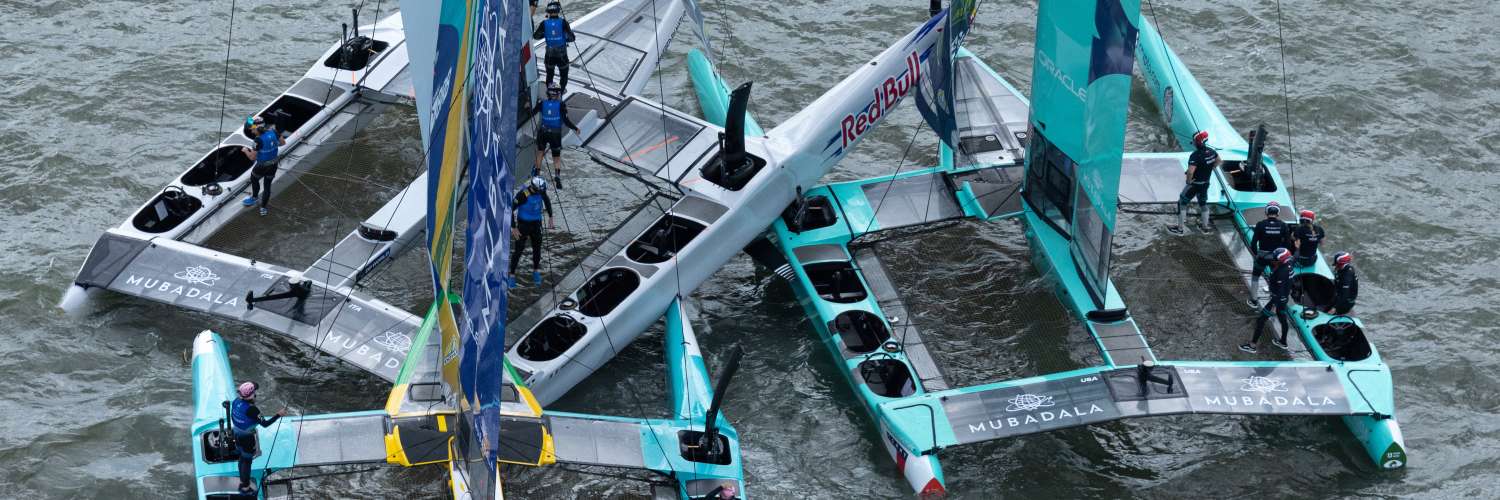
After the New York crash, what should SailGP actually do? The Foil community weighs in

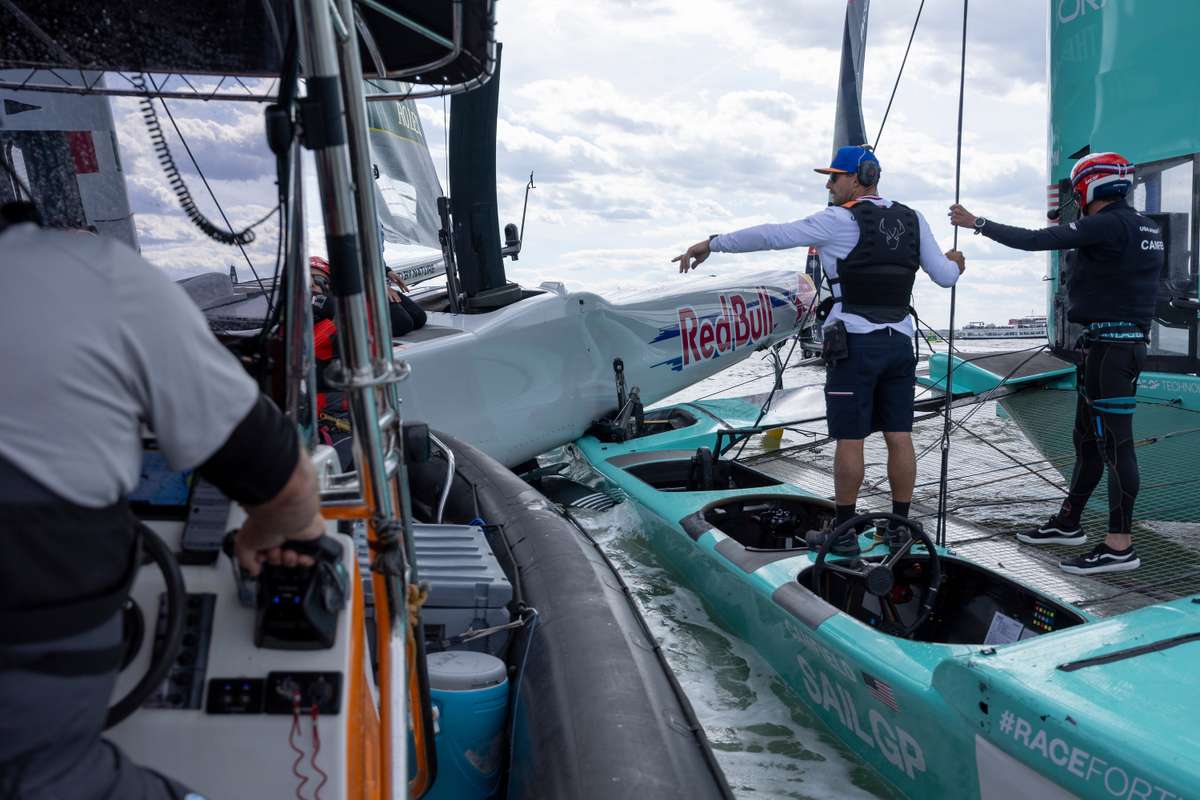
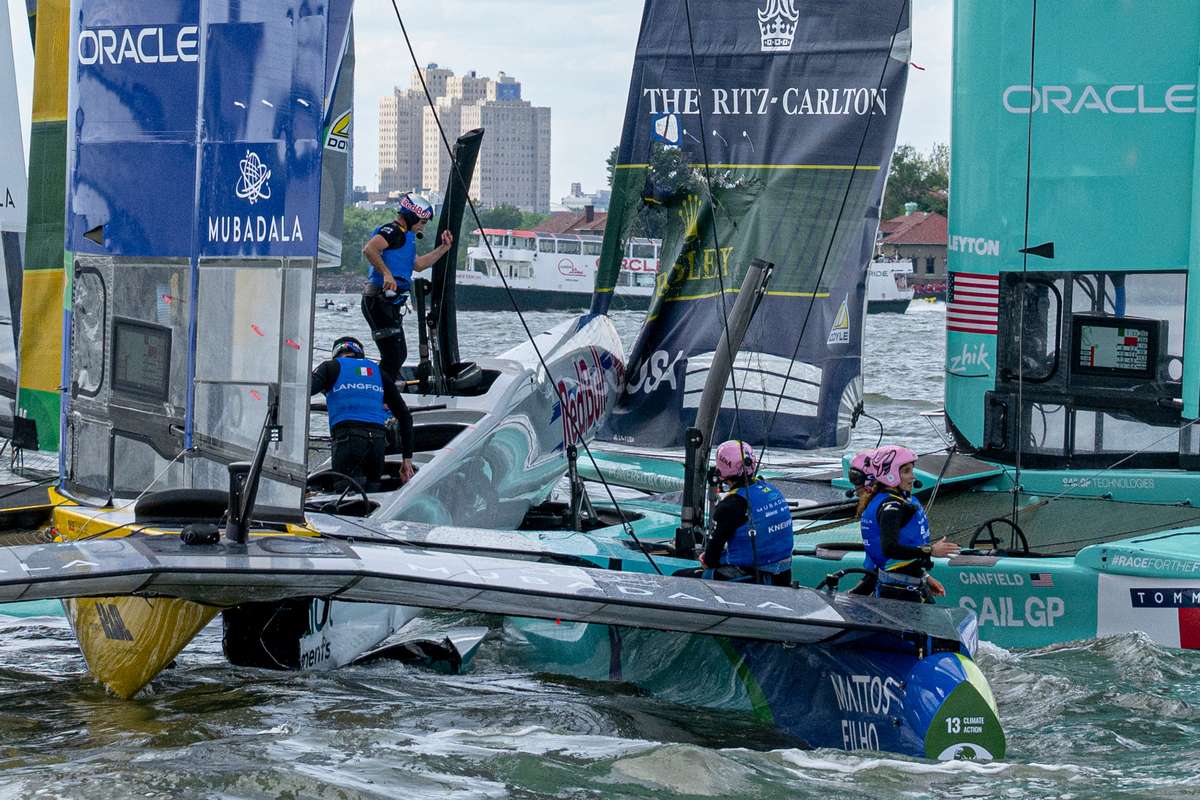
Nothing gets people talking quite like a crash. The pile-up at the New York SailGP has set off the loudest debate we’ve seen in The Foil community since, well, the last major collision in Auckland, just four events prior.
With close to 500 comments across our last few videos, there’s one point almost nobody contests: carrying on exactly as we are isn’t an option. Not if the league wants to keep its sailors safe and its reputation intact.
What to do about it is another matter. So we’ve gathered some of the most insightful comments and sorted them by the kind of fix they’re after. Here’s how the community sees it.
Safety vs. Spectacle
Before we look at potential fixes, it’s worth noting how rattled people are. Time after time it comes back to one thing: a sport moving faster than its own safety precautions.
One commenter put it about as bluntly as it gets – “Redefining sailing is all fun and games until someone gets eviscerated by a foil” – while others look to the early, lethal days of motor racing as the obvious parallel.
The physics aren’t complicated, as one viewer noted: higher speeds need more separation and clear sightlines, and the rules feel “antiquated” set against the boat speeds and ever-growing fleet. Few people want to watch near-death experiences on TV.
- “With this kind of extreme foiling sport it’s bleeding obvious that collisions are completely unacceptable. Yet weekend in weekend out we see these boats piling into each other out of control… it’s obscene and going to look criminally negligent when a sailor is killed.”
- “These SailGP boats are about as safe as a World War 1 biplane… When someone is killed, there’s going to be a huge court case.”
- “I argue that if they don’t do something soon they may find themselves in a terrible predicament where a sailor driving a yacht at 45 knots over the top of another could be held liable for what we in the US call manslaughter.”
- “Provide the sailors with custom-made full-face helmets which includes comms, tracking, and emergency breathing apparatus built-in.”
Stay in your lane
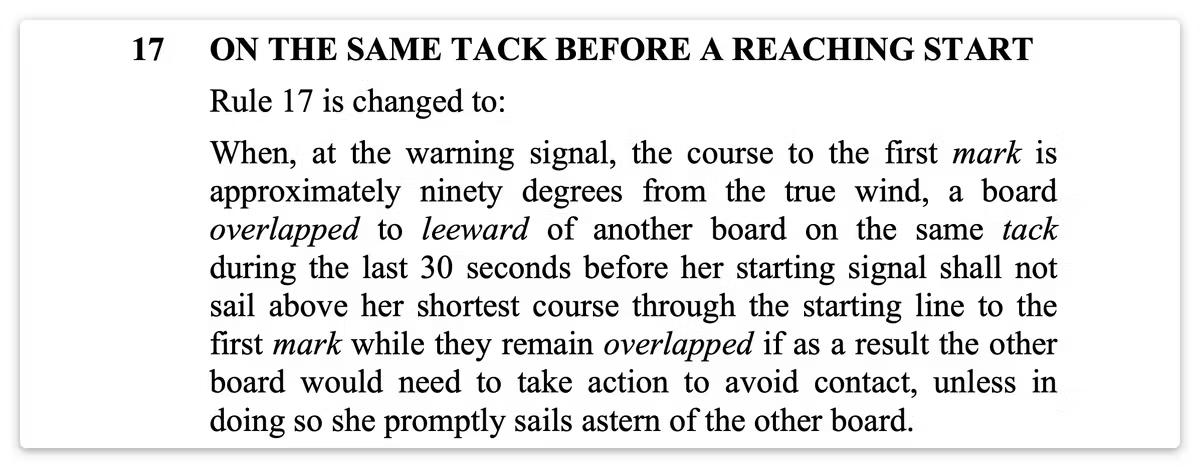
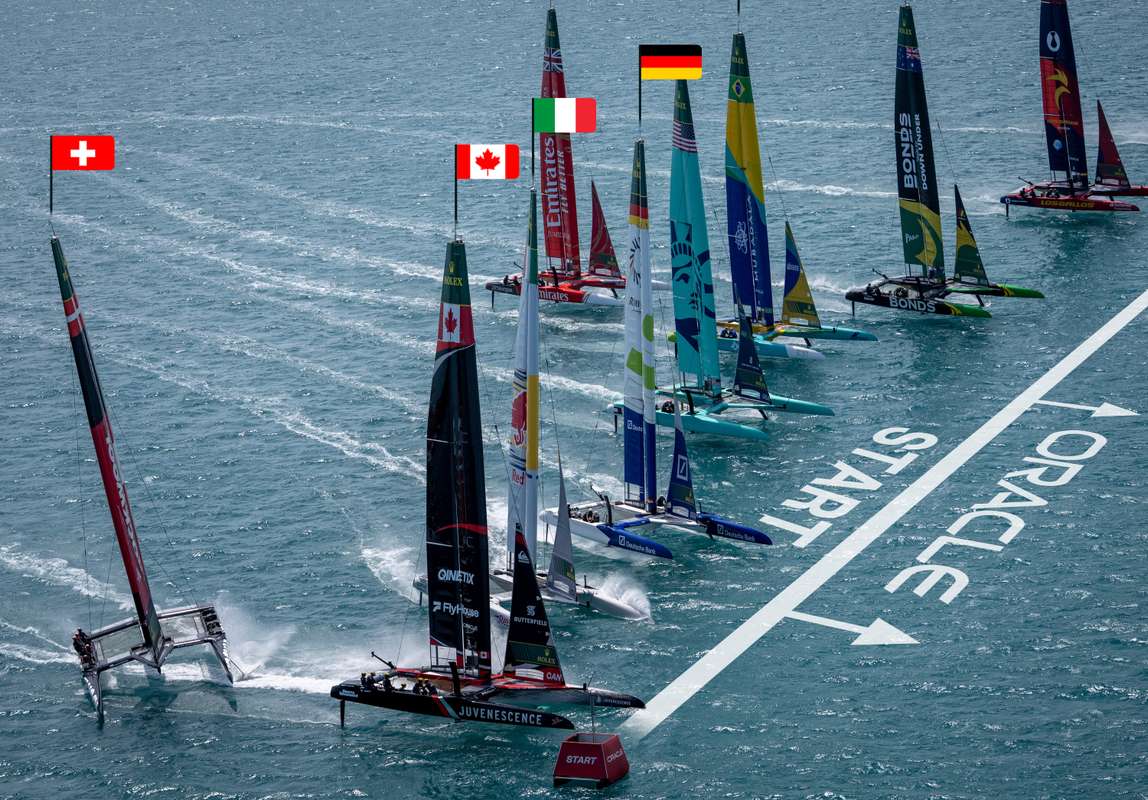
The most popular off-the-shelf idea is to lift a rule that already exists. The windsurfers and kiteboarders run reaching starts under Appendix B of the Racing Rules of Sailing, where once you’re committed you sail a proper course to the first mark and can’t suddenly carve up or slam on the brakes.
Plenty of commenters can’t fathom why SailGP hasn’t already borrowed it – one reckoned the league either hadn’t done its homework or was knowingly trading crew safety for spectacle.
- “Coming from IQFoil, I agree with you on the criticality of the angle to the first mark… In that rule, it states that we cannot significantly alter course or speed… considering the short box that SailGP has, I think they should probably modify that rule to about 10s.”
- “Before 30 to go, windward stays clear, all boats jockeying for position. 30 to go, position established, proper course… Once the start gun goes, there is no possible tactic in a fleet race reach where coming up 90 degrees or so… is advantageous.”
- “I race blokarts (small fast land yacht) and we have a start box… once you enter you cannot weave and must sail at 90 degrees to the start line, running the line is against the rules… apply the OCS rule.”
The catch, others warned, is that a hard “no windward boat” window turns the run to the line into a pure time-on-distance sum and strips out the tactics entirely.
Ditch the reach
The boldest suggestion is, ironically, a return to the old way. Several pointed out that the reaching start is a hangover from the early foiling era, when the AC catamarans could only get up and fly on a reach. That’s not the case with the F50s now, so why not square the line and start upwind?
Reaching starts, the argument runs, are more dangerous precisely because they fire most of the fleet into the power zone at once.
- “Upwind starts, though maybe not as sphincter-clinching as the reaching starts, sound much safer. I really don’t want to see anybody die bc of a boat race.”
- “I’ve commented before that the reaching starts are a relic from the time where the AC cats could only foil downwind… No reason they can’t change to upwind starts now.”
Not everyone’s convinced, though. Some worry that on such a compressed course an upwind start just swaps one problem for another…
- “The fix is making more room to sail these boats… With such a compressed race course I’m afraid if you did an upwind start you would have an even bigger risk of collision… everyone tacking off the boundary 30 seconds after the start.”
Awareness, not rule changes
For another group, the rule book is broadly fine – it’s the situational awareness that hasn’t kept pace with the speed. In New York, as one viewer noted, “with all the sailors on the starboard side, the only one who had a clear view was Robertson”.
- "All boats need one sailor on the opposite side of the rest of the crew at all times... Zero excuses for not seeing what is coming."
- “Why don’t they have a person on each hull for visibility… 2 seconds is not enough time to recognise an issue, understand it is an issue and communicate and do the right thing.”
Others want a step up in technology…
- “I don’t understand why the IT systems aren’t warning the ‘drivers’ that a collision is imminent. This is done in aircraft.”
- "Just install a loud hooter on the boat... If it was a dinghy start we would shout 'go up'... The problem here is, no-one looking."
Fix the incentives
Finally, a sizeable camp makes the case that the danger is written into the rules. As things stand, an early start (OCS) is punished so brutally – drop to the back before the first mark for the sake of a single second – that skippers are pushed into hair-raising manoeuvres on the line rather than simply taking the hit and sailing on.
The fix, many feel, is to flip the maths: make a clean start the thing worth protecting above all else, then come down hard on dangerous sailing.
- “Early starts should not be penalised like it is done today, effectively condemning the early starter to finish last… Early start by 1 sec → behind the 4th rank before mark 1… Additionally, penalty point deduction for dangerous behaviour.”
- “Italy should’ve sailed over the line early and taken penalty, rather than sail up the line endangering people, and wrecking three boats… The rules should incentivise having a clean start above all else.”
- “Require the boat changing course to provide a competitor with enough time and space to react to the change… The onus must be on the competitor making his course change.”
- “The league are setting themselves up for repair bills the way the umpires rule these incidents… they need to put more fault on the boat acquiring right of way.”
The other side of the argument
For all that, not everyone’s convinced anything needs fixing, with a handful in the comments who reckon this whole debate is a knee-jerk reaction.
- "This is indeed sport. No two ways about it. Motor racing is the correct analogy. And motor racing accepts that crashes happen. And if you have seen a massive pile-up at Monza in the Supercars, then you will know that the cost of these crashes makes crashes in SailGP look cheap, and very VERY rare. So, please stop all this frantic pearl clutching and hand wringing. It is pathetic. No one is going to get killed - especially if full face helmets are specified, with emergency breathing apparatus built in... The sailors are the people most aware of the closing speeds, and so they more than any other people on earth know best just how dangerous the sport of multihull foiling can be. And they are well-paid professionals who would not be doing it if they assessed the risk vs reward to be wrong. That much is inarguable."
So what now?
The crowd has handed SailGP a menu rather than a single answer, and the different camps outlined above don’t all pull in the same direction. Some of it could be in place by Halifax next week, while some of it would reshape the racing entirely.
Which leaves the questions SailGP now has to answer. Does it lift a proven start rule straight from the foiling boards, or trust that better tech and an extra pair of eyes will do the job? Is the reaching start worth the risk it carries, or is it finally time to square the line? And does the league have the appetite to penalise dangerous sailing properly, even when the danger makes for exactly the footage that sells the sport?
The one answer the vast majority of fans won’t accept is to do nothing. Over to you, SailGP.
UPDATE 17 JUNE: Sir Russell Coutts has since had his say
Articles You Might Be Interested in
Los Gallos snatch Geneva from the Flying Roos
Five races, five winners on day one of SailGP's Geneva drift
Ratcliffe isn't backing down – what the latest INEOS vs Athena court filing tells us
Freddie Carr: Oceanpact-Viking holds its nerve to win J/70 World Championship
Martine Grael points to ‘team dynamics’ after Brazil SailGP exit
Two drivers down: Who steers the US at Geneva SailGP?
Freddie Carr: Leopard 3 and North Star III crown a Maxi Yacht Rolex Cup for the ages
The week in racing - 14 Sep ‘26



Member Discussion