
Could Project33 be the GP2 boat SailGP is missing?

Motorsport has a ladder. Before Formula One there was GP2 – now Formula 2 – where young drivers learned to handle something fast, complicated and close enough to the real thing, without the F1 budget. Sailing has never quite pulled off the same trick for SailGP. Two Portuguese brothers think they might have the answer.
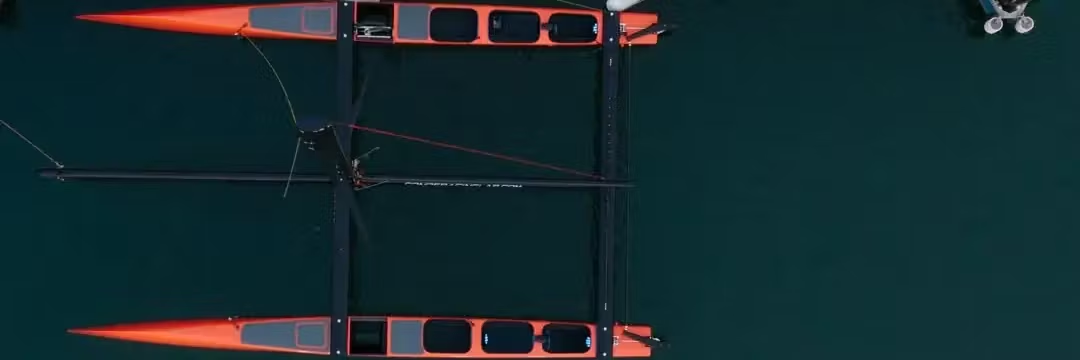
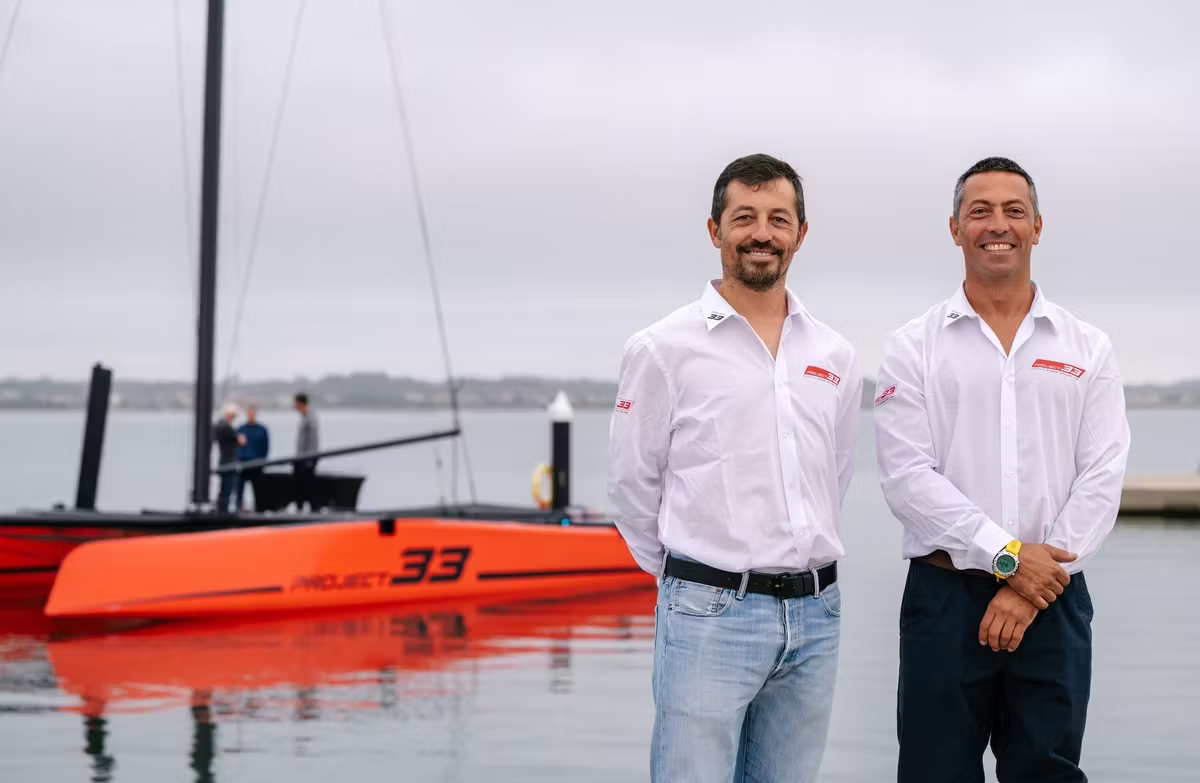
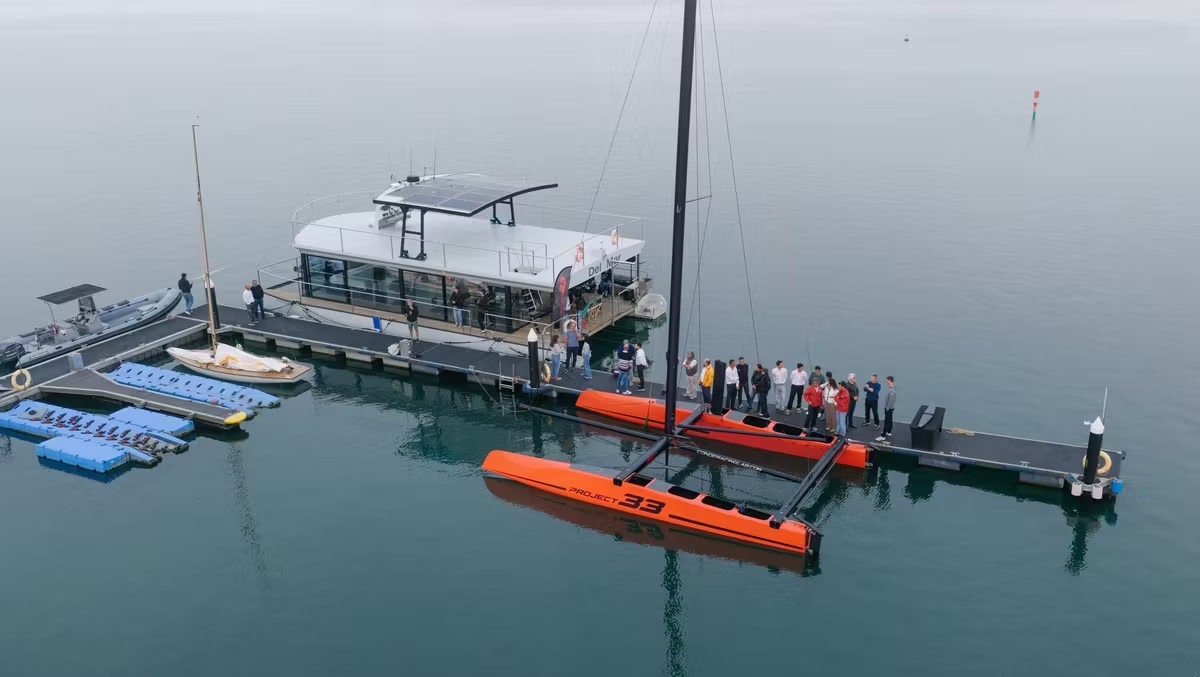
Project33 is the work of Renato and Gilberto Conde, who built it at a yard in Gafanha da Encarnação with no outside funding or partners. It’s a 10-metre carbon foiling catamaran for a crew of three or four, and the Condes are pitching it less as a race boat than as a training and development platform.
Seeing the gap from the inside
Renato has spent his career near the top of the sport. He sailed The Ocean Race with Mapfre, worked shore crew for SoftBank Team Japan and INEOS Team UK in the America’s Cup, and was bowman for SAP Extreme Sailing Team on the GC32 circuit before joining the Danish SailGP team.
It was in SailGP that he saw the problem up close. Between a packed calendar and the cost and logistics of keeping specialist kit on the water, most SailGP sailors struggle to train consistently between events.
If the established stars can’t get enough foiling time, spare a thought for those trying to break in. SailGP’s Inspire programme now puts young wing foilers in front of the crowds at selected grands prix, and some teams run their own pathways, such as Britain’s Athena Pathway. But between a wing foil board and an F50 there’s a huge gap, with no shared second tier that everyone sails.
An F50 in miniature
Gilberto leads the technical side, designing the foils and mechanisms, and the cockpit borrows heavily from the F50 playbook. It’s steered with a wheel rather than a tiller, it has rudder differential, and the mainsheet, jib sheets, traveller, rudder, foil rake and foil cant are all electrically controlled. New T-foils and rudder elevators are designed to get it flying earlier.
The sail plan is deliberately simple: a 59 m² main and a 26 m² jib, with no kite or Code 0. The team projects 22–36 knots in 20 knots of breeze and 40-plus in 25, although those numbers have yet to be proven on the water.
Stepping stone or stepping into the void?
On The Foil Podcast last week, Freddie Carr’s verdict was that this “could be the boat that is the perfect stepping stone”. It’s easy to see why. A crew of three or four suits a youth or development squad, the controls build habits that transfer straight to an F50, and a 33-footer should be far cheaper to ship, store and run than a 50-footer.
But a stepping stone is only useful if other people step on it. Right now Project33 is one self-funded boat, with supplier partnerships still to be announced, no published price and no fleet. It flies soft sails rather than a wing, so the trimming isn’t quite like an F50 – though with so much else on board close to the real thing, that’s hardly a deal-breaker.
What would turn Project33 into a genuine GP2? Buy-in from SailGP or its teams, enough boats for proper one-design racing, and a circuit – ideally running alongside the grands prix, the way Inspire already does.
The Condes have built the boat. Now they need people to race it. If SailGP ever decides it wants a GP2 – as Coutts claimed at the Auckland event in February – it might find one waiting in Portugal.
READ MORE: SailGP's F50 super licence is here – but can the infrastructure keep up?
READ MORE: Why Pensacola could change SailGP for good
Topics
Articles You Might Be Interested in
The week in racing - 26 Oct ’26
Russell Coutts calls time on SailGP’s veterans, but age is the wrong target
Freddie Carr: Why Pensacola could change SailGP for good
Emirates GBR and Team 14 claim first slots on SailGP’s Pensacola training F50

SailGP’s year-round training base is about to open for business
American Express secures title rights to SailGP's Hong Kong opener
The RC44: how Russell Coutts hit a winning formula




Member Discussion