
No fuel, no engine: how Ferrari Hypersail powers itself (Pt. 3/7)

Satellite-grade solar cells, wind turbines on a rear spoiler and the electric axle from Ferrari's first EV. In Part 3 of this series (Part 1 / Part 2), Andy Rice follows the energy.
Every big offshore racer carries a secret. Behind the green credentials, there is usually a diesel engine somewhere, quietly charging the batteries. Ferrari Hypersail does not have one.
"We don't have any fuel on board," team director Enrico Voltolini told me. "That is something completely new, because even the Ultim teams have a diesel engine to run the normal utilities on board." Instead, this boat has solar panels, wind turbines, two big batteries and its crew.
When I was at the construction yard in Pisa, it became clear that this was not a side project. Energy self-sufficiency is one of the two founding goals of Ferrari Hypersail, alongside flying. Without it, the flight control system has nothing to run on.
100 square metres of sun
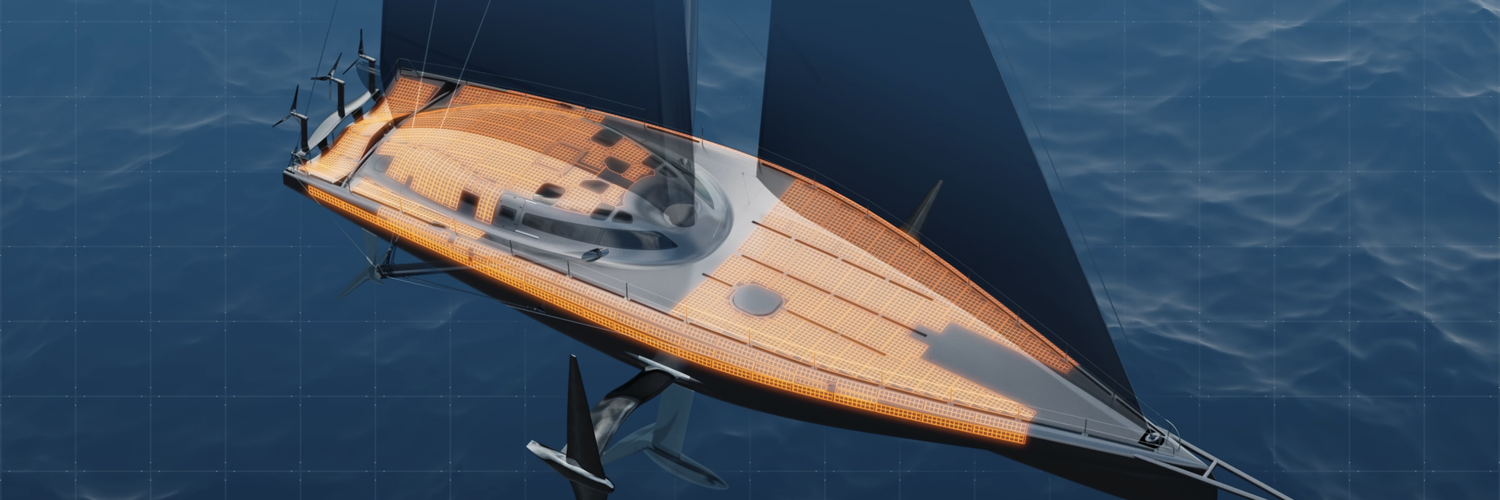
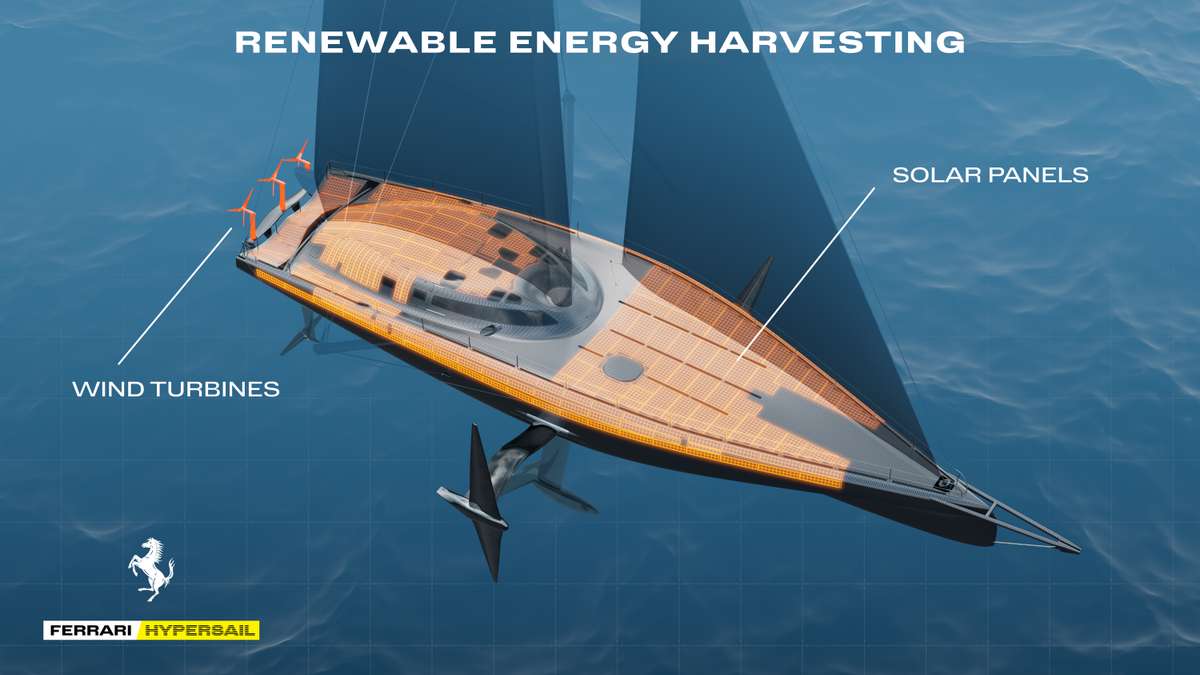
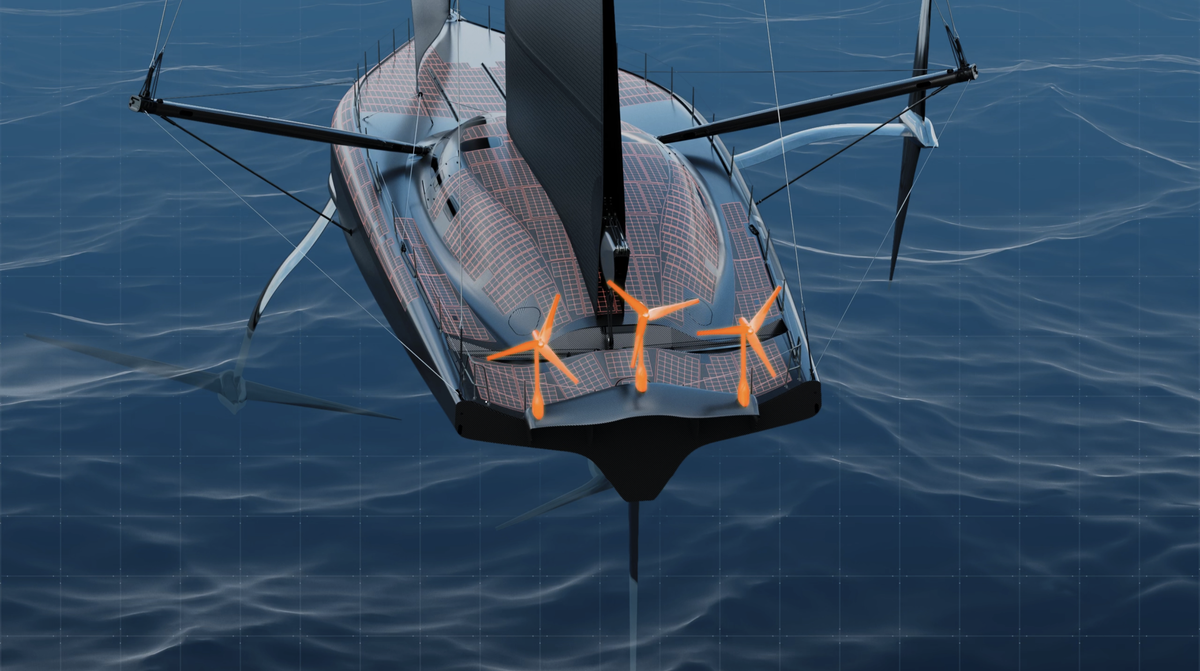
The solar array covers about 100 square metres, with 20.3 kilowatts of installed power. The team could have fitted more, but every extra panel adds weight. Around 100 square metres was where the trade-off settled.
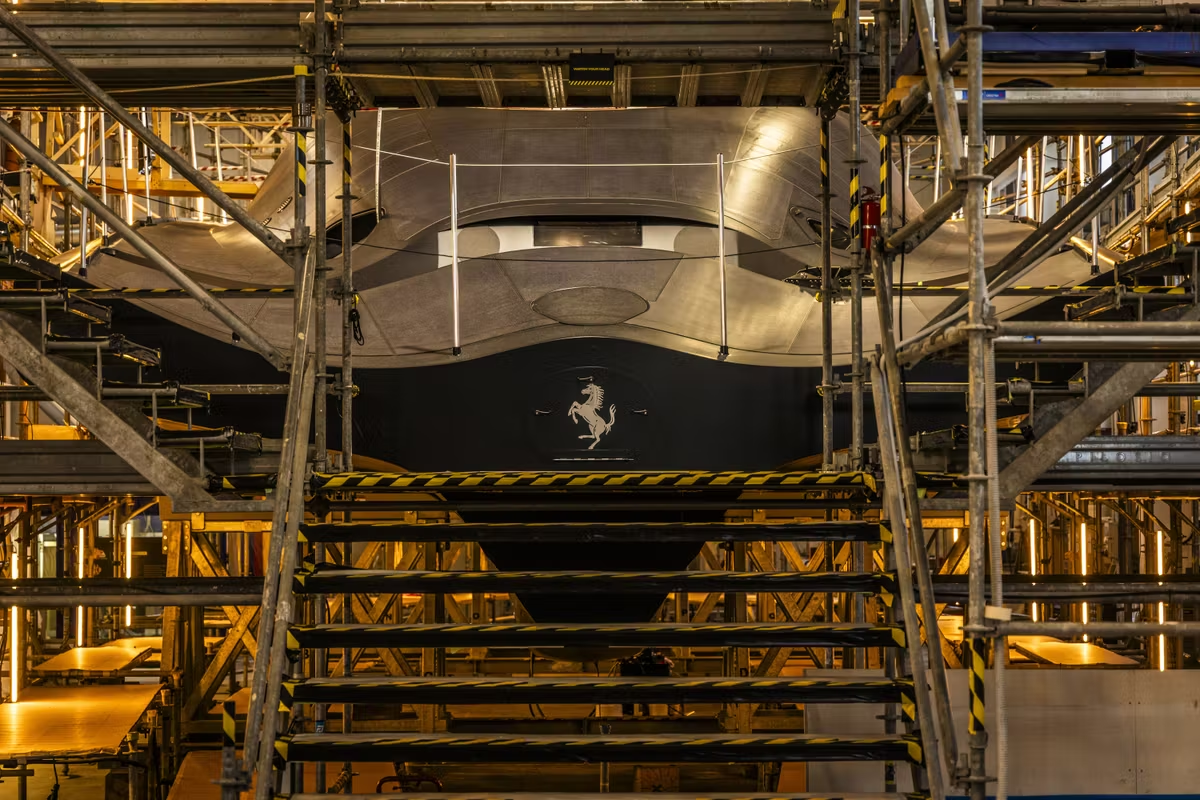
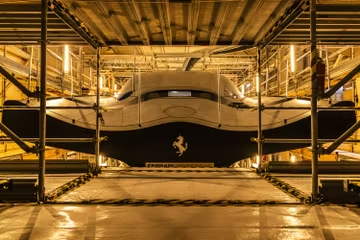
The cells are similar to those used on satellites. They have also been coloured to match the boat. Ferrari spent more than a year getting the cells to blend with the Grigio Hypersail paint, so the hull looks like one continuous surface. Only Ferrari would go to that much trouble.
Where the cells sit matters a great deal. Marco Ribigini showed us simulations that track the shadow of the sails against the sun's position, wherever the boat is in the world. The deck is in the mainsail's shadow about half the time. So the cells on the stern and the coachroof collect sun for roughly twice as long. "Every single cell here is worth double the ones in front," he said.
The first rear spoiler on a boat
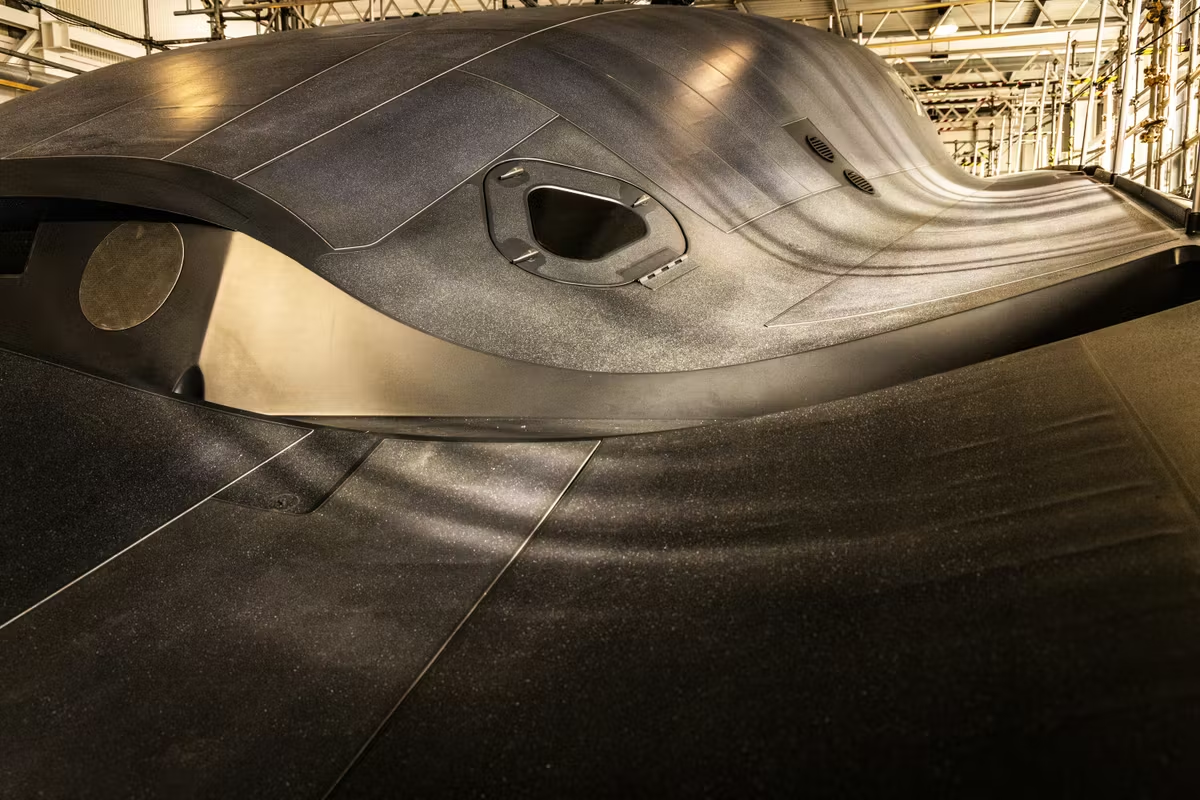
Now to the detail that will get everybody talking. At the stern, Ferrari Hypersail has a rear spoiler. As far as the team knows, it is the first on any boat.
On a car, a spoiler pushes the car down onto the road. This one works the other way. It uses the apparent wind flowing off the back of the boat to create extra lift, adding to the lift from the foils. The hull's two side lines are shaped to guide that airflow smoothly onto it.
The spoiler has two other jobs. It is home for the antennas – Starlink, GPS and the rest – sitting outside the shadow of the sails, so they always have a clear view of the sky. And it has mounting points for up to three wind turbines.
Wind turbines that work in a gale
The turbines are one of the project's patents. The problem with putting a wind turbine on a fast boat is range. This boat will often see 40 or 50 knots of apparent wind. A blade big enough for light air is too big for a gale, and a blade small enough for a gale is useless in light air.
Ferrari's answer was to control the turbine's electric motor, using what it learned on the Ferrari Luce. The patented controller lets the turbines run in anywhere from 0 to 80 knots of wind. That means they can stay mounted all the time. It took more than three years to develop. The crew can choose how many turbines to fit and where, and move one across when the boat tacks or gybes.
A Ferrari Luce axle, under the water
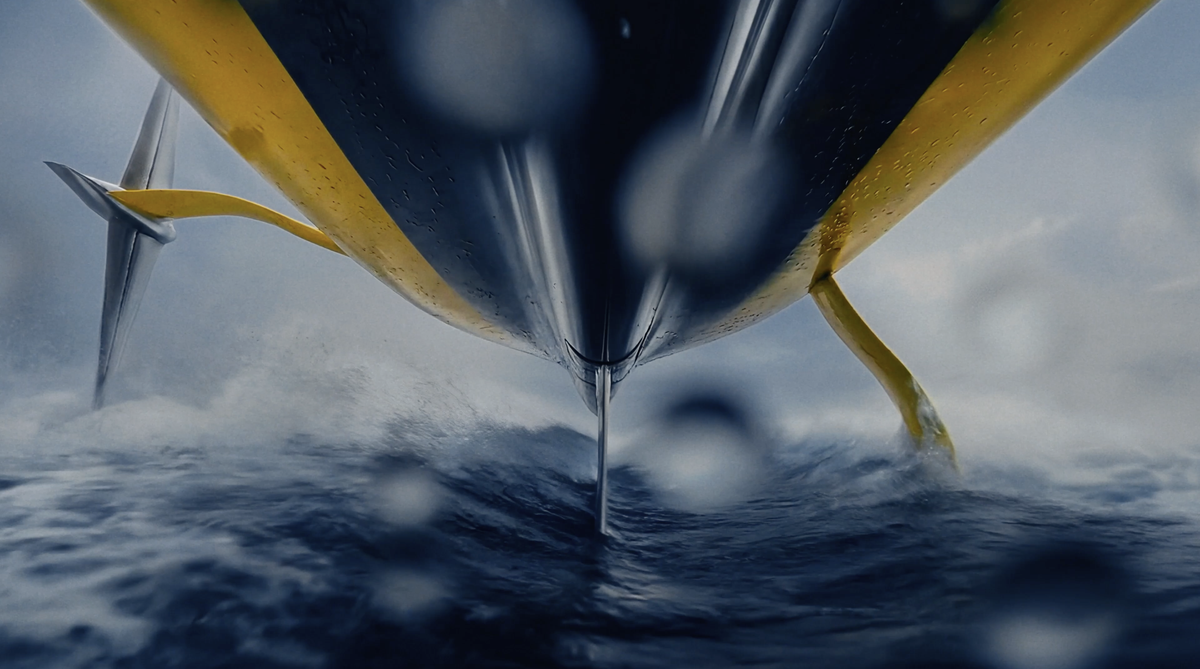
The most surprising piece of car technology on board is the rear axle from the Ferrari Luce, the company's first electric car. It has two electric motors. On a car, they would drive the two rear wheels. Here, one drives a propeller under the hull, while the other drives the big hydraulic pump that moves the foils and flaps.
Will the propeller push the boat through the Doldrums? No. Use it in a calm, said Ribigini, and you would drain the batteries quickly. You simply wait for wind. The propeller is for getting in and out of harbour.
It can also work backwards. When the boat is sailing in displacement mode, the propeller can spin in the water flow and generate power – just like a car recovering energy when you brake. Once the boat is flying, the propeller is out of the water and that option ends.
Grinders that make electricity
The last power source is the crew. Ferrari's patented winch-by-wire system replaces the usual mechanical link between grinding pedestals and winches. The e-pedestals feed a 48-volt power line instead, so power can switch from one winch to another instantly.
In a conventional setup, up to 25% of the power can be lost when four pedestals try to work together. Winch-by-wire removes most of that loss. Matteo Lanzavecchia told me it is the patent he is proudest of.
All that energy then feeds a complex electrical system: 800 volts for the high-power systems, 48 volts for the flaps, and 24 and 12 volts for electronics. Even the cabling has been chosen for weight, with partner Prysmian supplying very light cables of the kind used on aircraft.
So the boat can fly, and it can power itself. In Part 4, I take a closer look at the winch-by-wire system – and whether it could matter beyond this one boat.
Topics
Articles You Might Be Interested in
Route du Rhum runners and riders: Ultim

Route du Rhum 2026: the essential guide
Russell Coutts calls time on SailGP’s veterans, but age is the wrong target
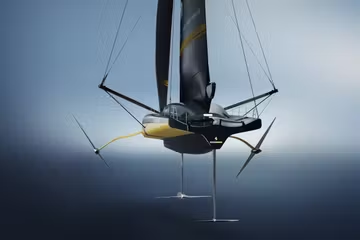
Three legs and an electronic brain: how Ferrari Hypersail will fly (Pt. 2/7)
Django 7X edges out Balthasar for Rolex Middle Sea Race overall win
From partners to opponents: inside the North Sails–Team New Zealand patent battle
Grigio and Giallo: Up close with the finished Ferrari Hypersail hull (Pt. 1/7)



Member Discussion