
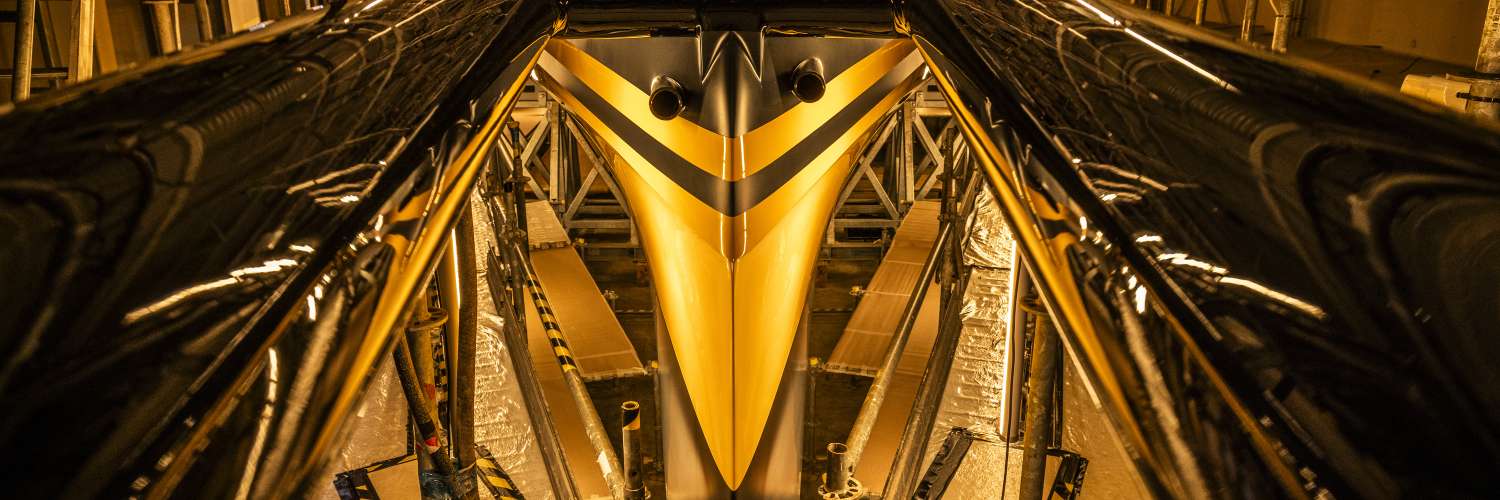
The boom that survived on Ferrari Hypersail: rig, sails and seeing in the dark (Pt. 5/7)

Lose the boom? Three reefs or one? How do you see in the dark? Andy Rice hears how the arguments behind Ferrari Hypersail’s rig and safety systems were settled.
Every boat is a made up of compromises. The interesting ones are the compromises people fought over. When I was at the construction yard in Pisa, Marco Ribigini was refreshingly open about a few of those disagreements.
Glenn Ashby's radical idea
The best story concerns the boom. On a foiling boat, the mainsail is pulled to the centreline nearly all the time. So Glenn Ashby, the multiple America's Cup sailor who has advised the project, asked an obvious question: why have a boom at all? Take it away, use the hull as the structure, and save a lot of weight.
It was a serious proposal. Ribigini says Giovanni Soldini, who started the project, was open to the idea. But they were outvoted.
The reasoning goes to the heart of what this boat is for. "You cannot fly at 45 knots in five-metre waves," Ribigini said. An America's Cup boat races for half an hour in a box. An ocean record boat has to keep going for weeks. What wins is not peak speed but the highest possible average speed – and that means reliability. The boom stayed.
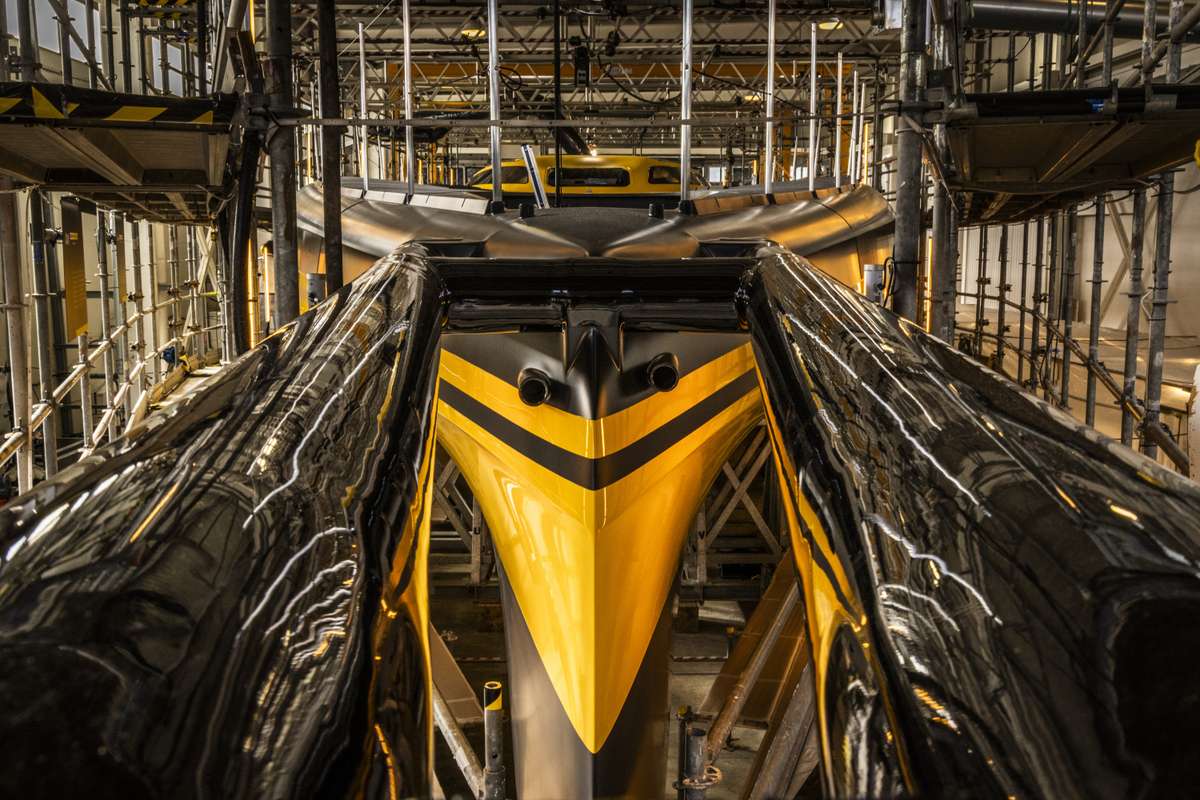
One reef, not three
The same thinking shaped the mainsail. The sailors originally wanted three reefs. But every reef point needs attachment points sewn into the sail, and those deform its shape. After a long debate, the team chose a single reef of about five metres, with a roller-reefing system inside the boom.
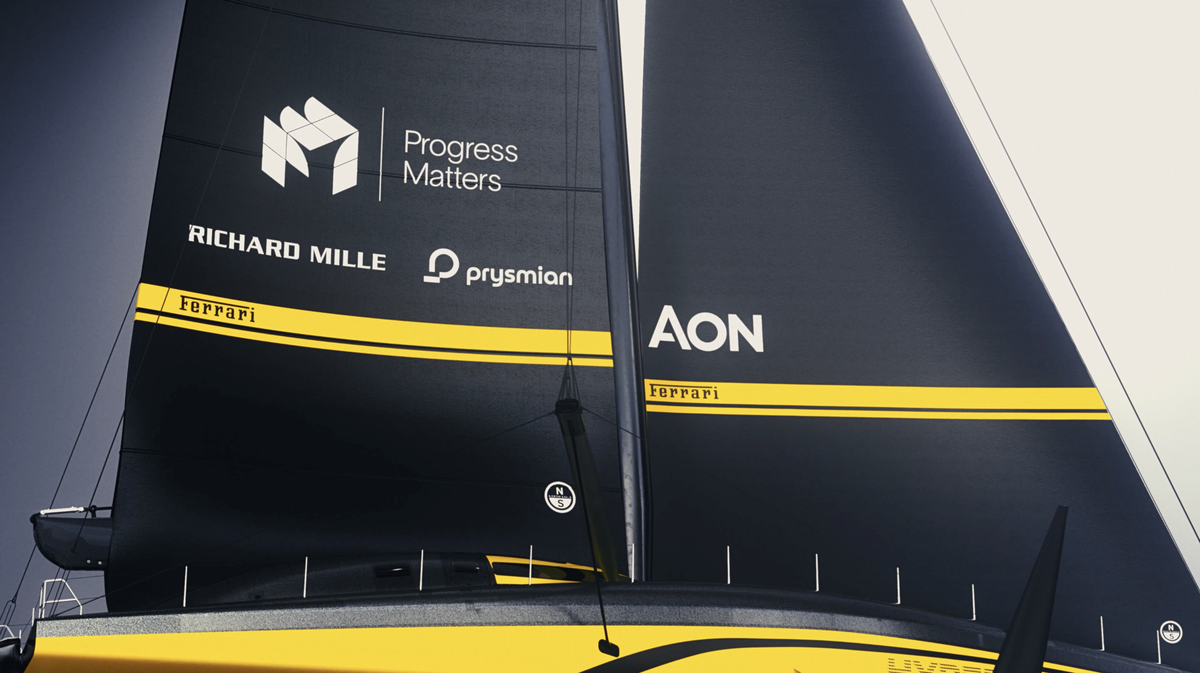
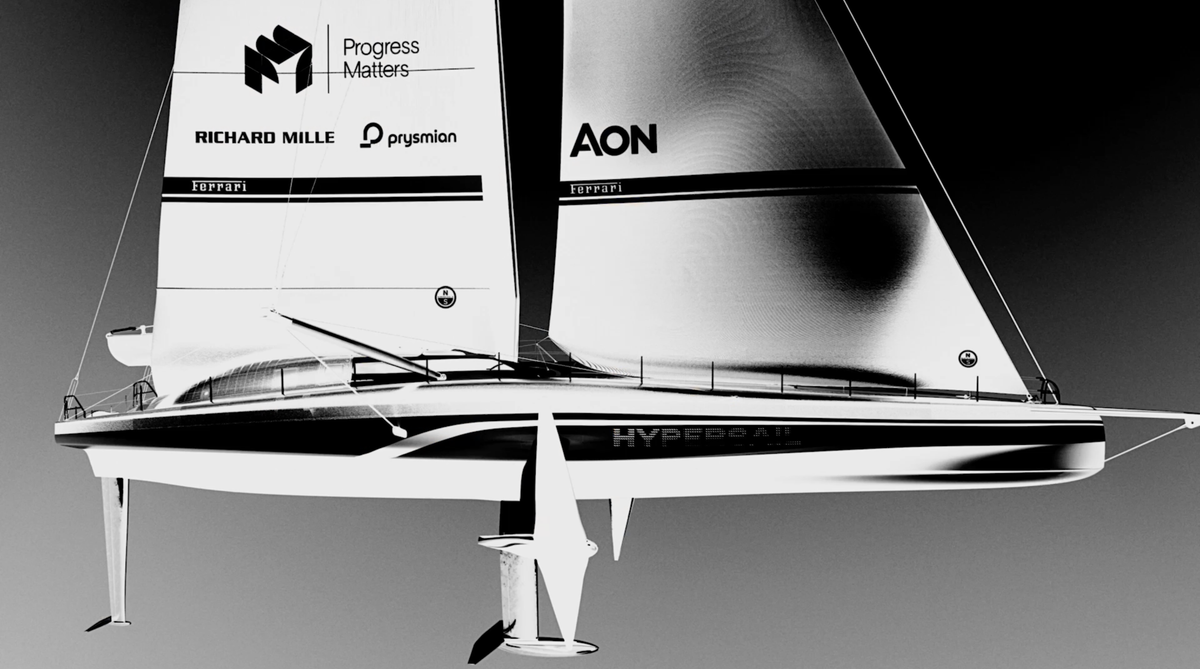
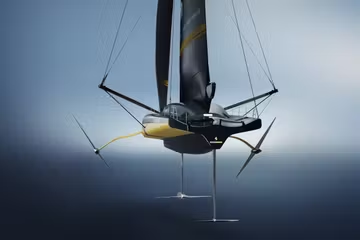
The mainsail itself is a double-skin design – the first on an offshore racing boat, according to the team. It sits on a rotating mast fitted with winglets, small wing-like surfaces designed to improve sail control. Both are among the project's more than 20 patents.
A shorter mast on purpose
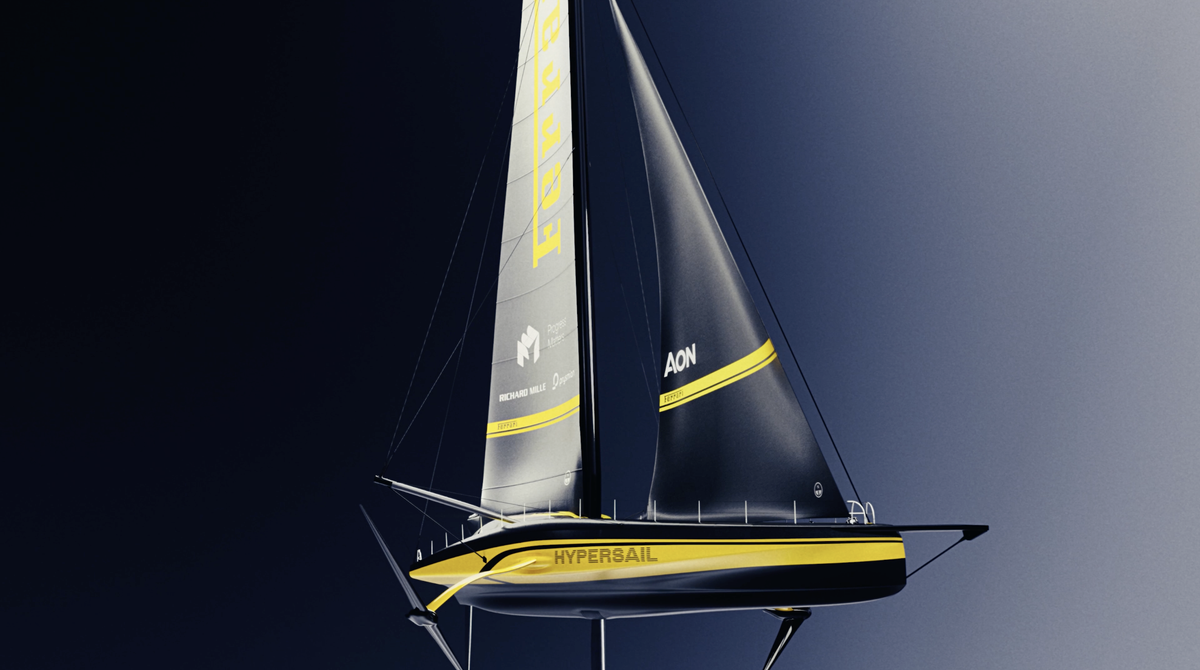
The mast is 35.5 metres tall, carrying 462 square metres of sail. That is short for a 100-footer, and it is deliberate. A shorter mast lowers the centre of effort, which gives the boat more righting moment. The windward foil can also pull downward, helping to hold the boat down. And the aim is to keep the hull's belly close to the water, so air does not get underneath it.
The mast is being built by Southern Spars in Auckland. The sails are coming from Gosport. Both should arrive in Italy by the end of November.
Fewer headsails than you'd think
The sail plan has also slimmed down. The team started with a J2, J3 and J5, and then worked on a big J0. Once they modelled the boat in flight, they found the J0 was barely needed. It has been replaced by a "J-top": a more pointed sail for very light air, mainly for early testing in displacement and skimming modes.
The J2 is the workhorse. The team expects to use it 80 to 85% of the time. Above 20 knots, it's the J3 or smaller.
Seeing underwater
The second argument was with Soldini, and it was about safety. Ferrari's engineers are used to cars packed with radar and LiDAR. So they asked the veteran sailor how you see what is under the water at night. His answer, Ribigini recalls, was that you can't. If you hit something, you hear it.
The engineers found that hard to accept. So they designed a system to see underwater. The only technology that works there is sonar, and a sonar unit now sits in the nose of the keel bulb.
Above the surface, a partner company supplies an AI-based system combining infrared, thermal and stereo cameras. Its neural network learns to tell a real object from a breaking wave or a shadow. The more data it collects, the better it gets. The two systems are combined to give the crew a picture above and below the water.
Hiding from lightning
Lightning was the next question. With an electrical system running at 800, 48, 24 and 12 volts, and dozens of computers on board, a strike could be a disaster. The traditional sailor's answer was to hang an anchor and chain in the water.
That is not practical at 50 knots. Instead, the team found a company in Varese, northern Italy, that makes a small antenna for the masthead. It works to cancel the build-up of electrical charge between the mast and the storm clouds – in effect, hiding the boat from the lightning. Filters on all four appendages protect against strikes close by.
Small details, big thinking
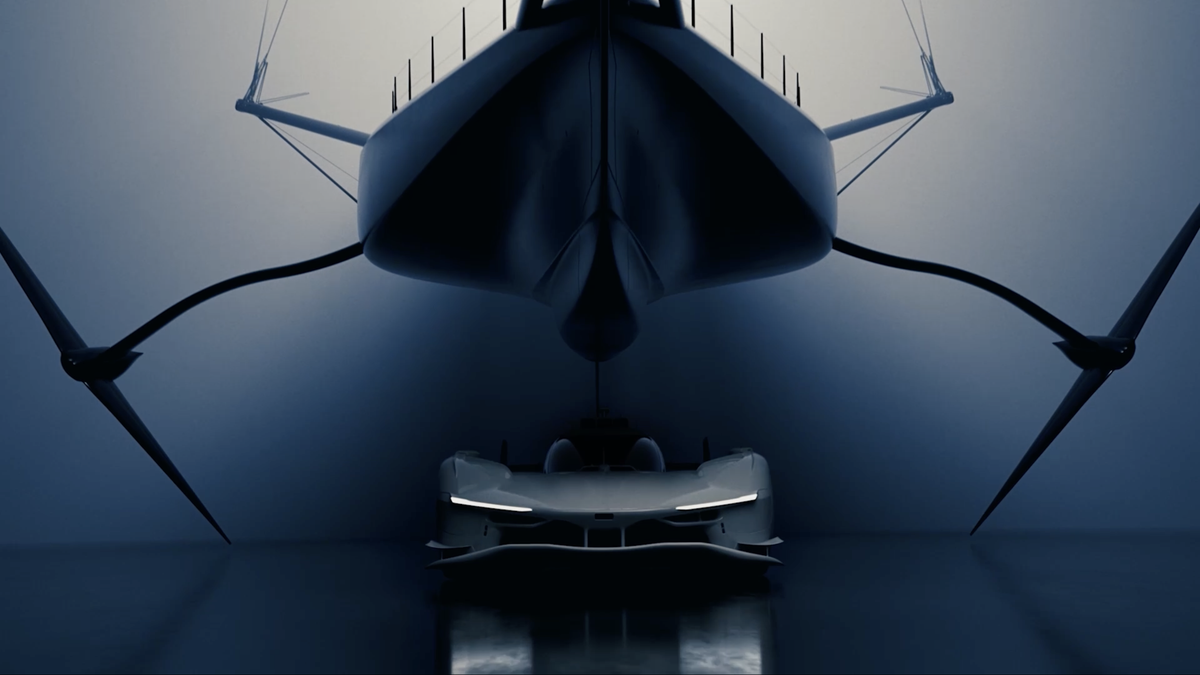
The small things tell the story too. The temporary guard-rail posts on the deck will be replaced by lighter ones in titanium; carbon was considered, but would have needed a bigger section. There is an emergency hatch in the stern in case of a capsize, with a life raft beside it. And if the boat does go over, release valves on the keel rams let it swing to 60 degrees to help bring it back upright.
That is the hardware. In Part 6, I sit down with Marco Ribigini to ask the harder questions: can this boat really tack in flight, and can a monohull beat the trimarans?
Topics
Articles You Might Be Interested in
Route du Rhum runners and riders: IMOCA
Ferrari Hypersail’s blank-sheet answer to grinding (Pt. 4/7)
Route du Rhum runners and riders: Ocean Fifty
Route du Rhum runners and riders: Ultim
Route du Rhum 2026: the essential guide
No fuel, no engine: how Ferrari Hypersail powers itself (Pt. 3/7)
Russell Coutts calls time on SailGP’s veterans, but age is the wrong target



Member Discussion