

Freddie Carr: The SSL Gold Cup could be the shake-up Olympic sailing needs

The second Star Sailors League Gold Cup brings 40 nations to Rio from 18 November to 13 December, all racing identical SSL47s. But it is more than a battle between nations. It could show the Olympic movement a way to make sailing easier to follow, more team-focused and more compelling for a wider audience.
Olympic sailing needs a good reshuffle. The sport has world-class athletes, brilliant technology and racing that can be gripping when you understand the decisions unfolding on the water. But too often the Olympic format makes that action difficult for a casual viewer to follow. The SSL Gold Cup offers a different model: national teams, identical boats, short fleet races and a knockout progression that gives every race a clear consequence.
Sailing’s World Cup
That is why I’m going to pay close attention to this second edition of the Gold Cup, which brings 40 nations to Rio after a qualification campaign involving 66. It is billed as sailing’s World Cup, and the comparison works. Countries compete under their own flag; supporters can follow a team’s progress; and the structure builds towards a final in which the result is immediate and easy to understand.
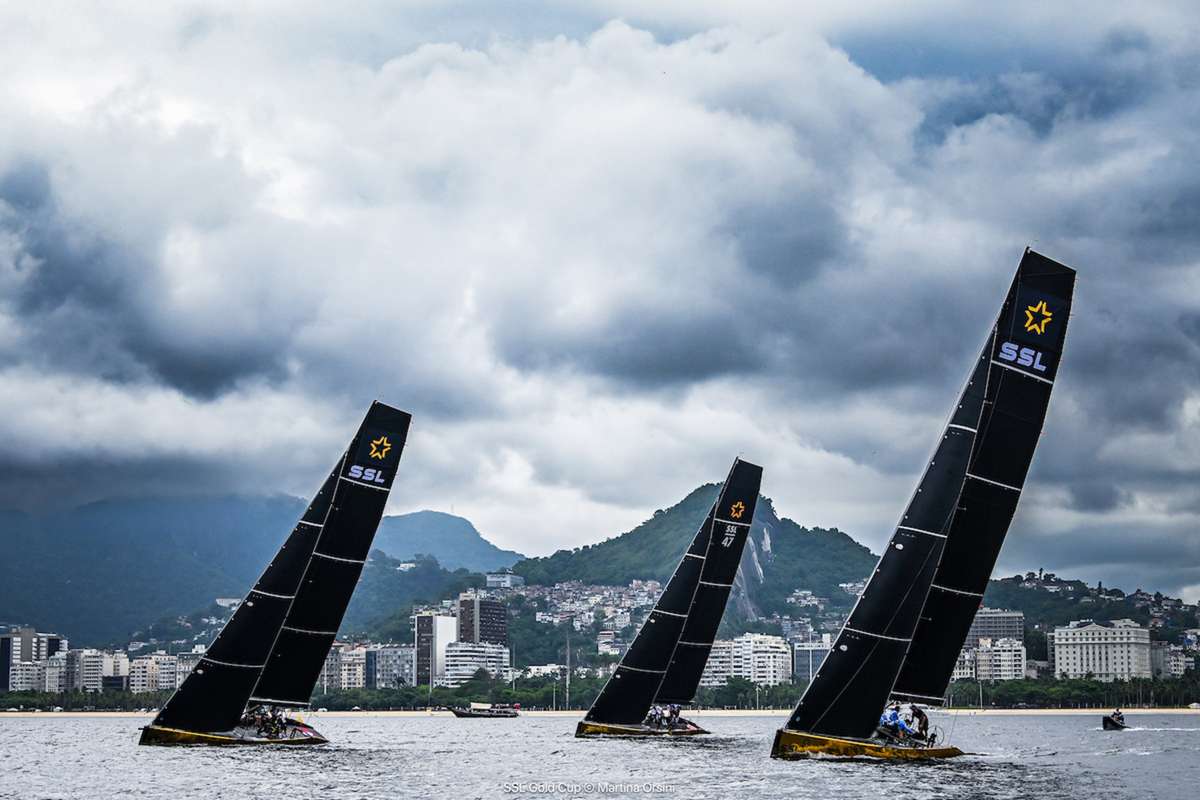
The route to Rio began with the Asian qualifiers in Thailand last December. African and Oceanian teams raced in June, European qualification followed, and the Pan-American qualifiers this week (12-15 Nov) are due to decide the final places. The finals then move through rounds, with four teams racing together and the top two progressing. Higher-ranked teams enter later, while those who start earlier have to earn their way through. At the end, four nations line up for one race to decide the title.
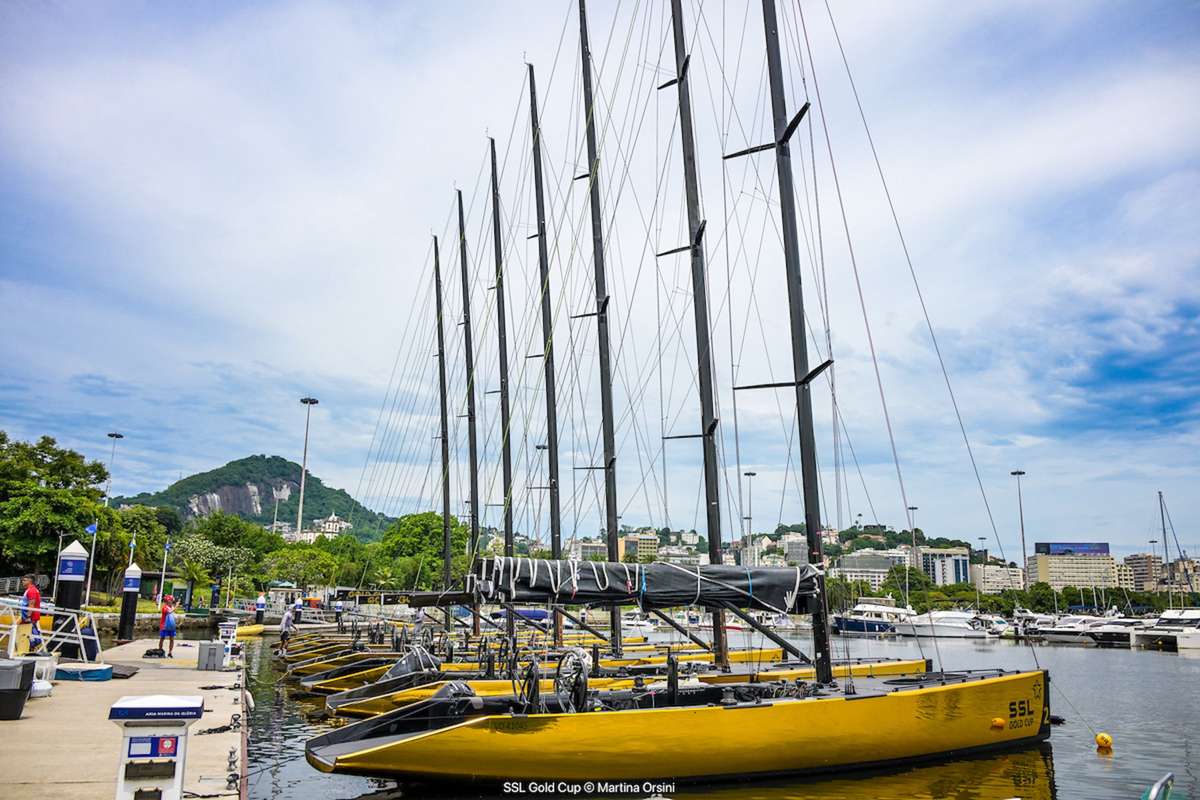
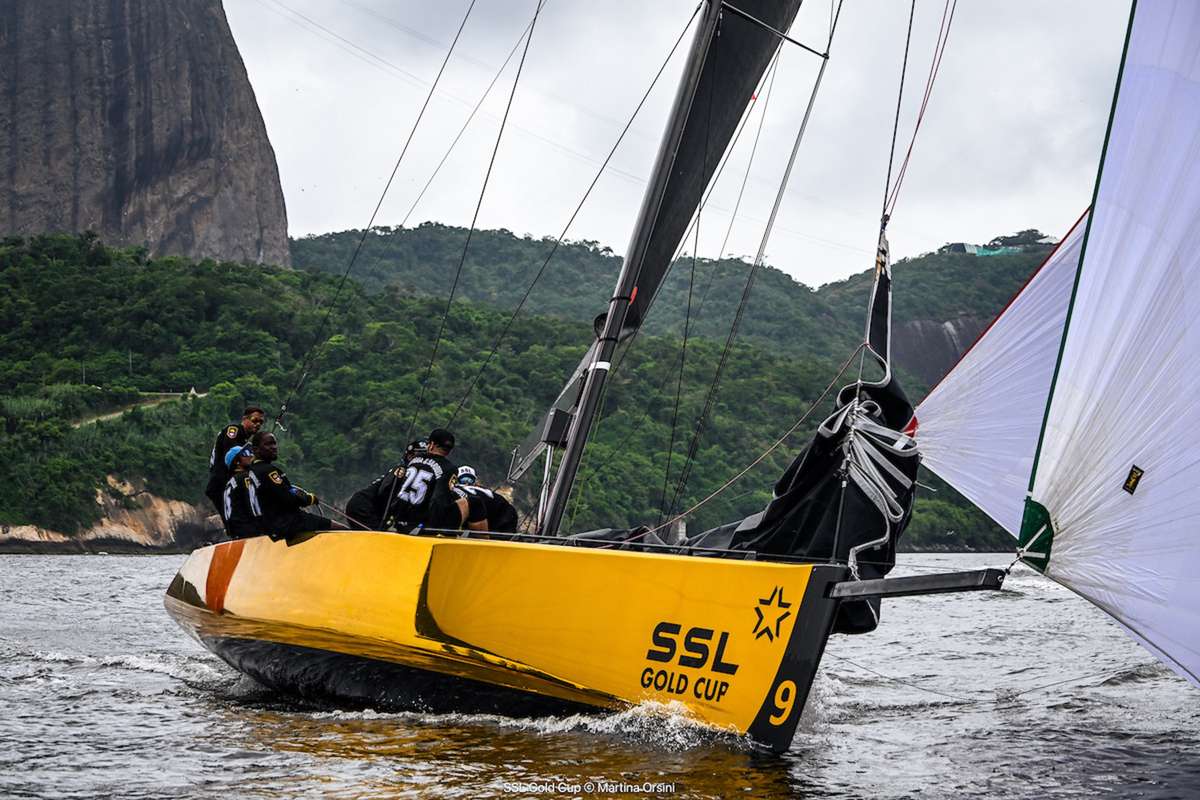
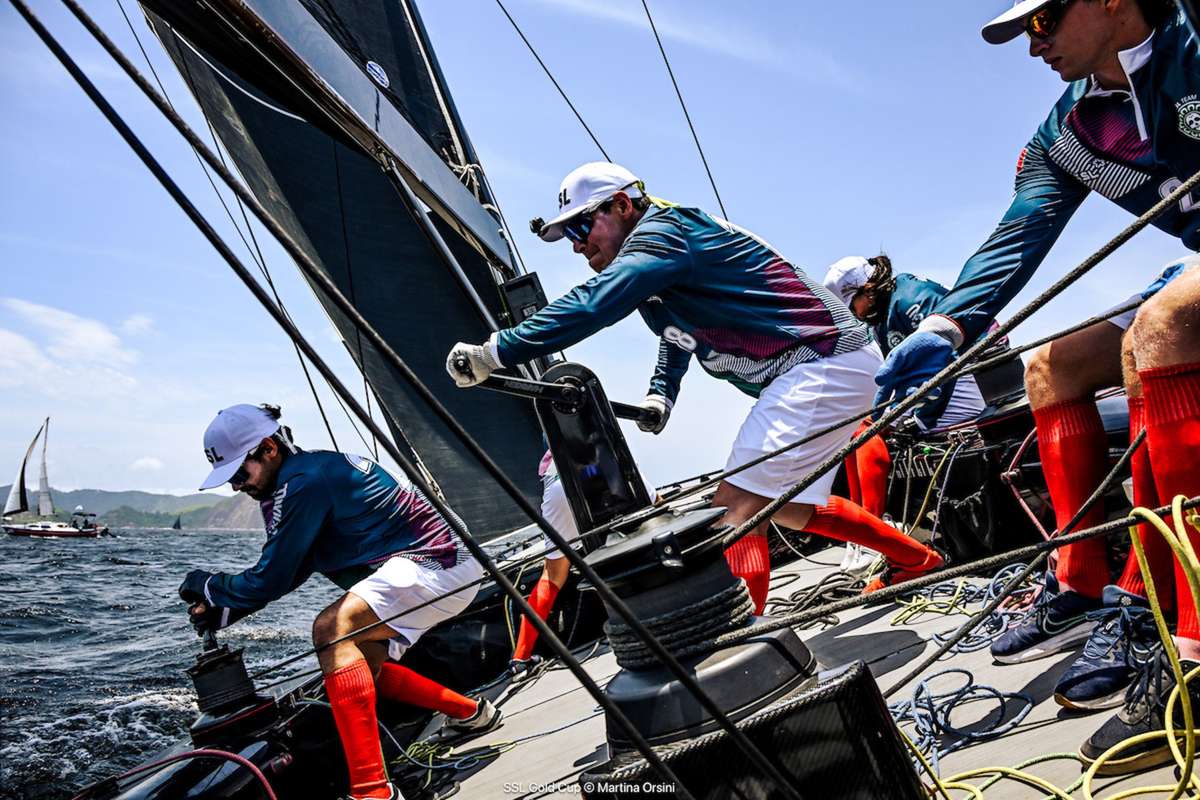
The boats are central to the idea. Every team races an identical SSL 47, so the focus is on the sailors rather than a design race between countries. These are powerful boats with a large crew, and getting them around the course quickly depends on a lot of people working in sync. At least one woman must be on board, and each squad must include at least two women. The national team format puts the emphasis on communication, role clarity and pressure management as well as individual talent. The best teams will quickly rise to the top.
A who’s who of world sailing
And look at the names involved. Two-time America’s Cup winner and Volvo Ocean Race runner-up Shannon Falcone, recently signed with Ferrari Hypersail, represents Antigua and Barbuda. Argentina have Olympic sailing hero Santiago Lange; Australia, America’s Cup legend John Bertrand; and Brazil, five-time Olympic medallist Robert Scheidt. France bring offshore record-breaker Loïck Peyron. Great Britain have Ian Williams, a record nine-time Match Racing World Champion. Spain’s line-up includes Támara Echegoyen, the Olympic champion who won gold in the women’s keelboat event at London 2012. And the United States have Paul Cayard, a world champion in both the Star and Etchells classes.
It is a remarkable concentration of experience and achievement, but the point is not simply to assemble famous names. The format gives those sailors a common platform and a shared goal: represent their country and get through to the next round. There is a story for viewers to follow even before the start, and a clear reason to care about the result as the race unfolds.
The 60% question
The Olympic landscape is changing, and fast. The IOC’s “Fit for the Future” work, under Kirsty Coventry’s leadership, puts a clear emphasis on whether sports can attract a global audience. In the criteria World Sailing CEO David Graham explained to me, global appeal carries 60% of the weighting. Cost and complexity account for 20%, and athlete participation and universality make up the remaining 20%.
That 60% is not simply a count of people watching the medal race on television. It includes the wider digital footprint: broadcast reach, online views and interaction, including attention around events beyond the Olympic Games themselves. In plain terms, the sport has to show it can earn eyeballs and hold them.
That should focus minds in sailing. Technical excellence and athlete quality matter, but they are not enough if a new audience cannot quickly understand who is racing, what is at stake and why the result matters. A format that carries a clear national identity and builds towards an obvious final could help answer that challenge. The Gold Cup gives us a chance to see how that proposition works in practice.
A blueprint for Brisbane?
An SSL-inspired event has been proposed for the Brisbane 2032 Olympics. The Mixed 8-Team Tournament, or M8TT, would bring eight national teams together in supplied boats for a compact competition. Its supporters propose a qualification pathway across continents, four-boat fleet racing and a final phase that could fit into the Games schedule.
The Olympic version would be smaller than the Gold Cup, with fewer nations and a different competition structure. And it is still only a proposal: it has not been approved, and other formats are also being considered. But it deserves serious attention when global appeal is weighted so heavily. Team racing can make national identity visible; supplied one-design boats can reduce the advantage of bigger budgets; and a compact series can give each race an immediate consequence.
Sailing should not mistake simplicity for a complete solution. Wind delays, course changes and tactical nuance are part of the sport. The challenge is to make those elements legible without taking away what makes sailing interesting. The SSL Gold Cup is a real-world test of whether small fleets, clear progression and national identity can help do that.
Why Rio matters
For me, Rio is about more than who wins the trophy. It is a chance to watch a format that may address some of the sport’s Olympic challenges: keeping the racing accessible, making the athletes and teams recognisable, and giving each race a stake in the final outcome.
Olympic sailing needs a format that shows more people why the racing is worth watching. The SSL Gold Cup may not be a golden bullet on its own, but an SSL-inspired medal event could be a powerful answer – especially when global appeal, the ability to attract and hold an audience, accounts for 60% of the criteria. That's why I’ll be watching closely.
The Foil will be streaming all the racing from the SSL Gold Cup live on our YouTube channel – stay tuned across all our channels to follow the action from Rio.
Articles You Might Be Interested in
How do you pick World Sailor of the Year in a sport this diverse?
Last chance saloon: SSL Gold Cup Pan-American Qualifiers get underway
F1's special projects crackdown, and what it means for sailing
"Raw, physical and in your face": Kai Colman on why the ETF26 is SailGP's proving ground
From the archives: the 2002 Route du Rhum, as it happened
Winning the day after tomorrow: inside the house of Gitana (Pt. 6/6)
The week in racing - 2 Nov ’26



Member Discussion