
The sweeper of the Atlantic

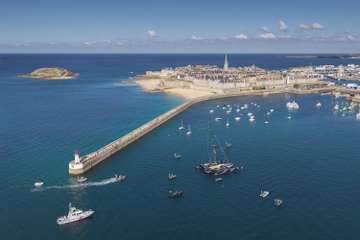
As 115 solo sailors set off from Saint-Malo on Sunday in the Route du Rhum, one of the most important figures in the race was nowhere near the start line. Adrien Hardy is out in the Atlantic, waiting – and hoping he isn't needed.
Every big motor rally has one. The French call it the voiture balai – the broom wagon – the vehicle that trails the field, sweeping up the cars that have broken down and the drivers who can go no further. Offshore racing has one too. His name is Adrien Hardy.
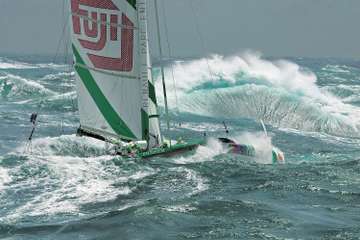
Loïck Peyron is one of many admirers of Hardy's work and commitment, and few people know this race better. Peyron has started the Route du Rhum eight times, the first in 1982 as a 22-year-old at the helm of the smallest multihull in the fleet. He finally won it at his seventh attempt in 2014, sailing the 31-metre maxi trimaran Banque Populaire VII to Guadeloupe in a then-record 7 days 15 hours. Four years later he went back for an eighth go in Happy, a sistership of Mike Birch's little yellow 1978 winner Olympus, navigating with a sextant. He knows the other side of the story too: in 2002 his trimaran Fujifilm broke up in a Biscay storm and he was plucked from the wreckage by a ship.
His verdict on Hardy: "He is the Red Adair of the Atlantic," referring to the Texan who made his name capping blazing oil wells from the 1940s into the 1990s, most famously in Kuwait after the 1991 Gulf War. It's a neat comparison. Like Adair, Hardy turns up when things have gone badly wrong, sorts out the mess, and goes home.
A sailor first
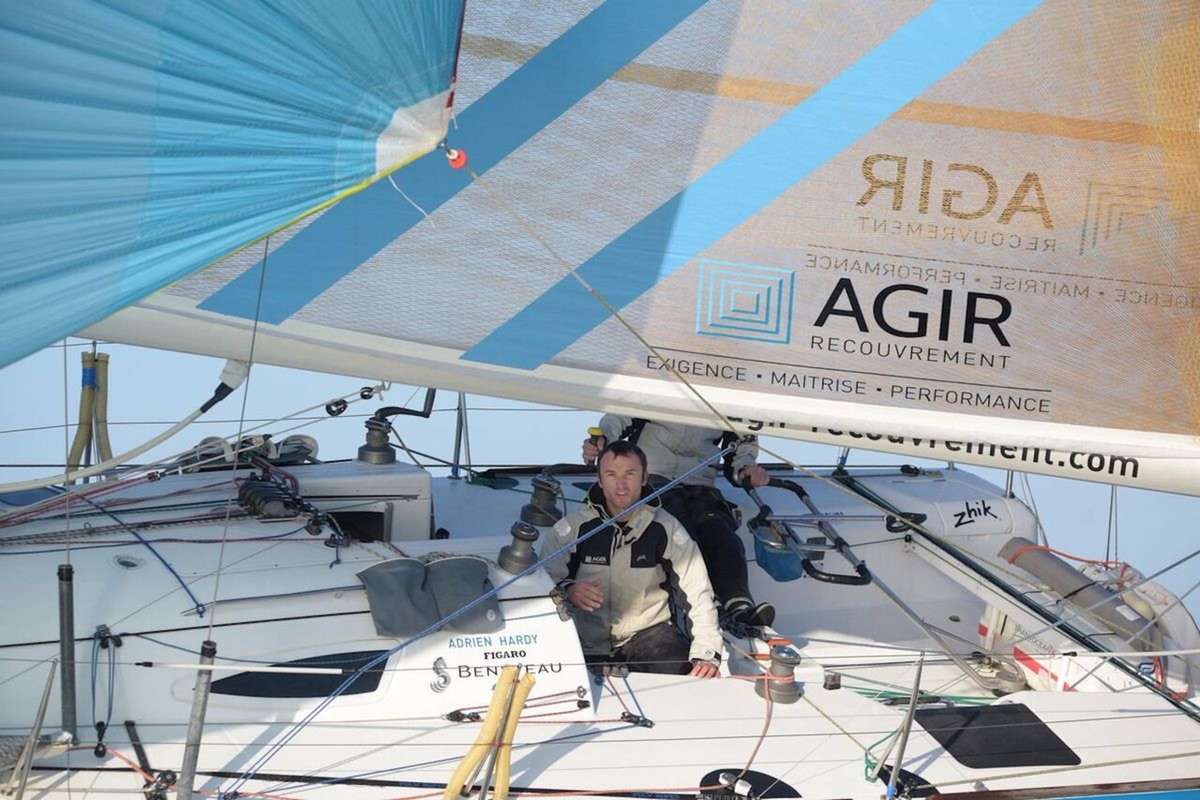
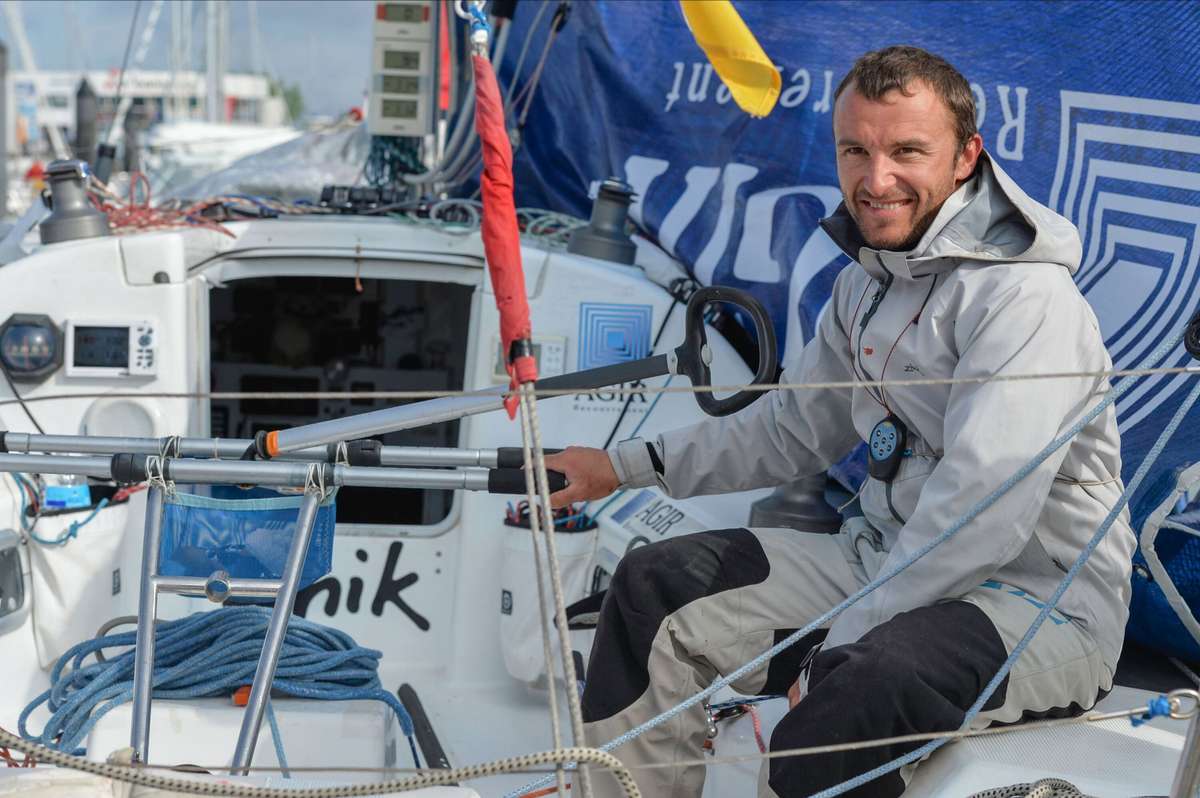
Before he was a salvage man, Hardy was – and still is – a hardcore Figaro sailor. Born in Nantes in 1984, he learned in Optimists on the river Erdre before moving through the 420 and into the Mini 6.50. It was in the 2007 Mini Transat that he earned the nickname "MacGyver": he dismasted mid-ocean, re-rigged the boat himself, and still finished sixth.
Then came more than a decade on the Figaro circuit. Stage wins in La Solitaire in 2010, 2013, 2015, 2017 and 2019, second overall in 2017, victories in the Generali Solo in 2013 and the Lorient–Horta Solo in 2014. In 2018 he won the Transat AG2R La Mondiale with Thomas Ruyant. This year he was back at La Solitaire, racing under the banner Sans Nature, pas de Futur! – "No nature, no future!" – which tells you something about the man.
"He's an extremely principled guy," says Marcus Hutchinson, an Irishman who has spent decades working in and around the French offshore scene. "He hates the concept of burning diesel fuel or throwing anything away."
The broom wagon
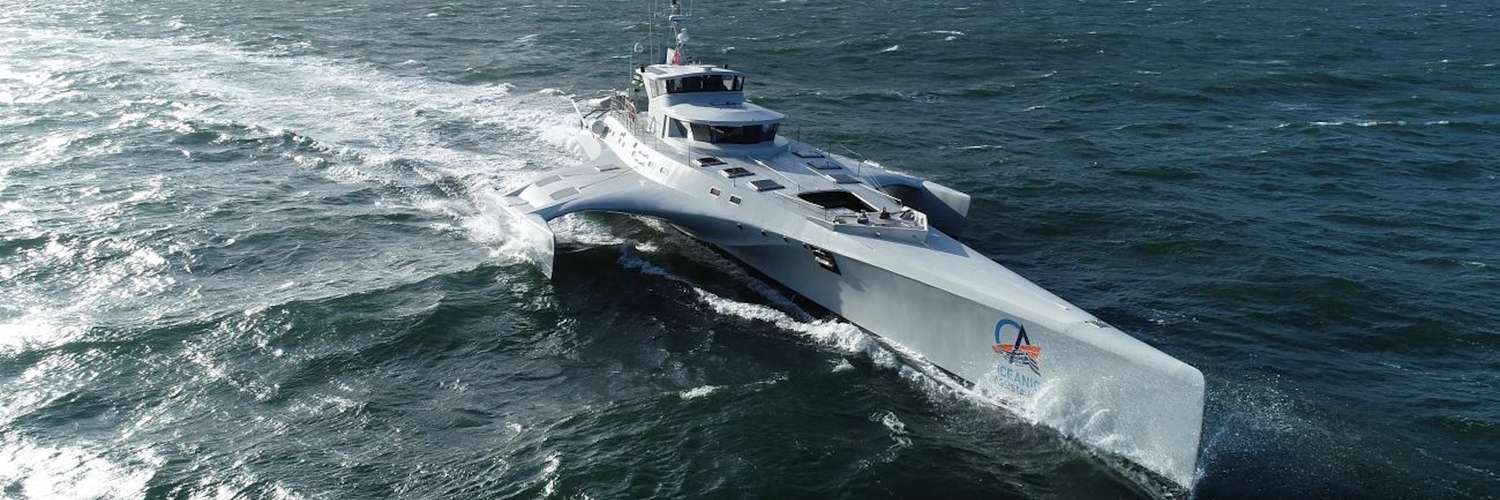
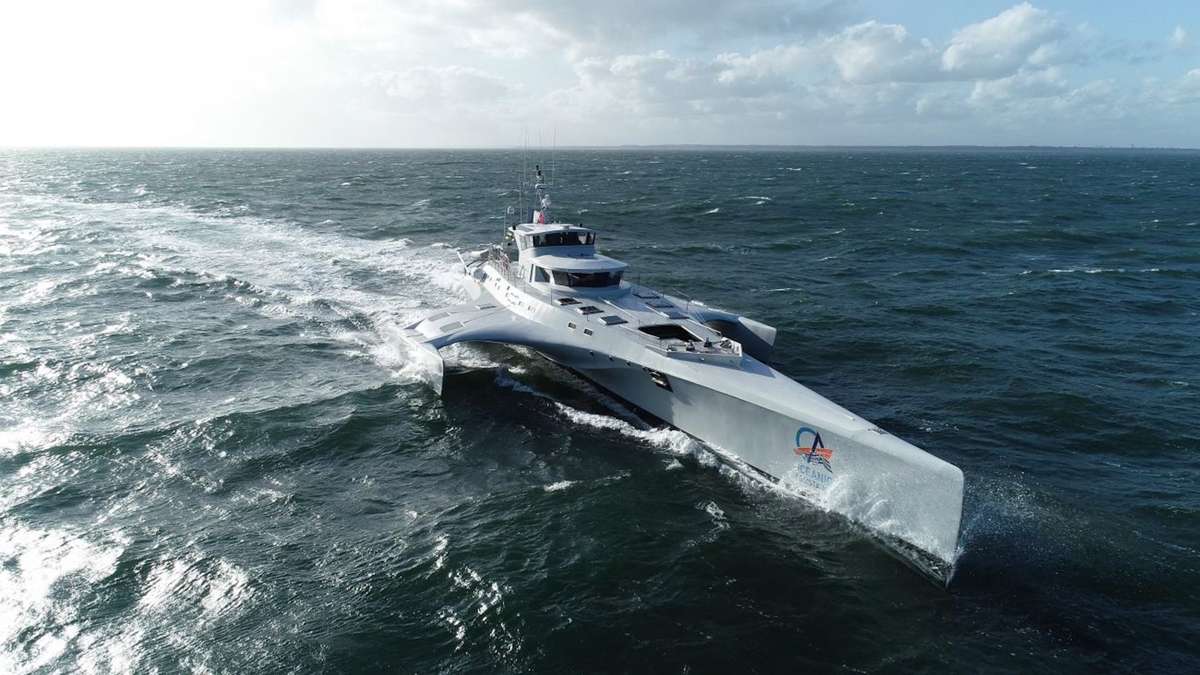
That principle drives his other career. Hardy runs Oceanic Assistance, a specialist rescue and salvage company, and in 2021 he bought its flagship: Merida, a 35-metre power trimaran with a long, narrow main hull and slim outriggers. Some readers will recognise it. Launched as Cable & Wireless Adventurer, it set a powered round-the-world record in 1998, then spent a decade chasing whaling fleets as Sea Shepherd's Brigitte Bardot.
For the Rhum, Hardy takes Merida out to the Azores and waits. The logic is brutally simple. For the multihull classes – certainly the Ocean Fifty trimarans – there is effectively no insurance to be had. Flip one or drop the rig and, as Hutchinson puts it, "it's a total loss."
So Hardy cuts a deal directly with the teams, not with the race organisers. "The teams mutualise the risk," Peyron explained, each paying an agreed sum into the pot. By Hutchinson's reckoning it's around 20 grand a boat for the Ocean Fifties, so with ten boats racing that's roughly 200 grand. In return, if you capsize, Hardy comes to get you – and your boat.
"It's a hell of a lot cheaper than a total loss," says Hutchinson. Hardy will recover the skipper if needed, right the boat and tow it to safety.
Seven hours
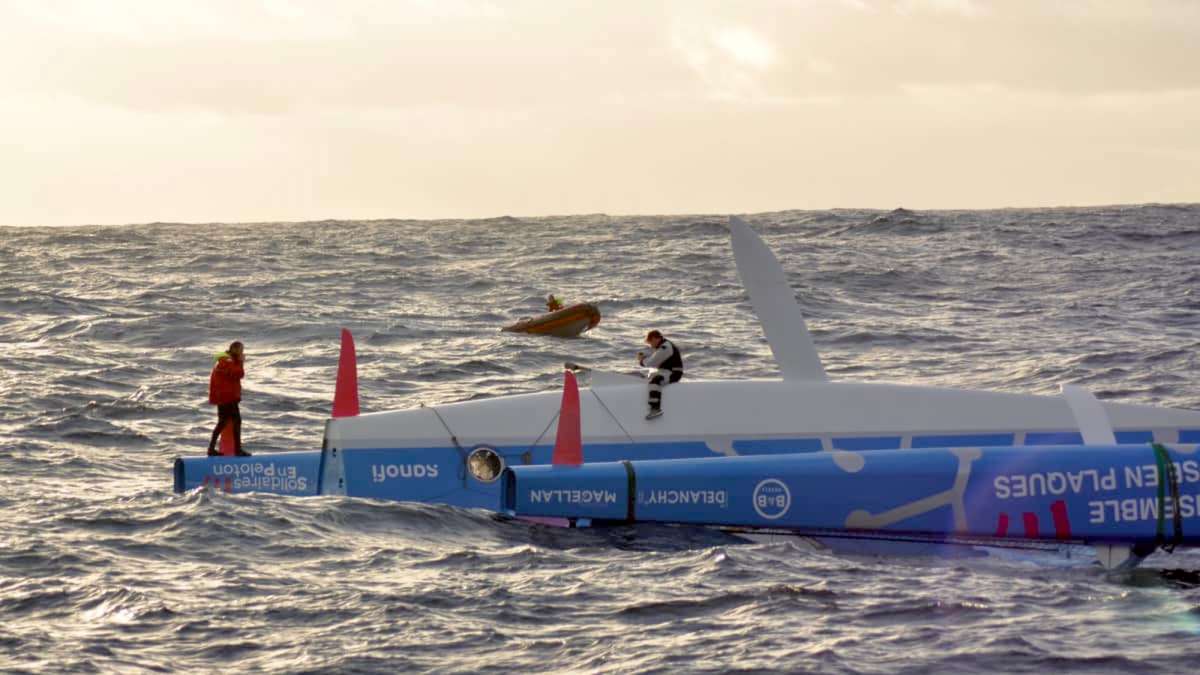
We have seen it work. In the 2022 Route du Rhum, Thibaut Vauchel-Camus was leading the Ocean Fifty class when Solidaires En Peloton–ARSEP capsized on the third evening of the race. Hardy reached him and had the trimaran back on its feet in open ocean in around seven hours, before bringing it into the Azores. Vauchel-Camus said afterwards that even as he waited inside the upturned hull, he knew Merida wasn't far away.
A multihull on its back, Hutchinson points out, is usually structurally sound. It will need a new rig and a refit after the flooding, plus some cosmetic repairs where the mast has been banging against it. But the platform survives, and that is the whole point.
No publicity, please
What makes Hardy unusual is how little he wants credit for any of it. Insurers, says Hutchinson, would love to brand Merida and parade it in Saint-Malo. "He doesn't want any of that. He wants zero publicity."
Of course, when you pull a capsized trimaran upright in the middle of the North Atlantic, the story tends to get out anyway.
What really frustrates Hardy is the waste he can't save. When a solo monohull sailor loses a rig, there's no way to haul even a 40-footer's mast back aboard single-handed. So it gets cut away and goes to the bottom. To Hardy, that's an anathema.
Sail it home
His thinking chimes with a wider shift in French offshore racing. Hutchinson remembers when boats reached the Caribbean or Brazil, had their masts and keels pulled and were loaded onto a ship back to France. These days, he says, unless a boat is badly damaged it is expected to sail home – and ignoring that can cost you your result and your next entry. "How ridiculous is it to have a fast racing boat and put it on a ship?"
It's a different culture from other grand prix circuits such as the TP52 series, says Hutchinson, where boats are routinely shipped a few hundred miles down the coast. Hutchinson is philosophical about it: "That's the wonderful thing about our sport. We have so many sub-disciplines that everybody's found what they want."
Out there, waiting
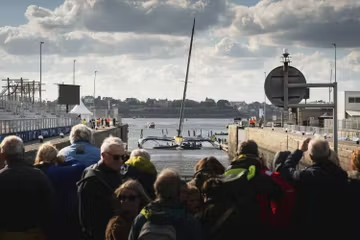
Sunday's start drew huge crowds to Saint-Malo. Hardy wasn't among them. He's most likely somewhere near the Azores with Merida, a man who would much rather go home with nothing to do.
But if a trimaran ends up the wrong way up, the broom wagon is coming.
Topics
Articles You Might Be Interested in
Who’s hurting and who’s leading 24 hours into the Route du Rhum
Things that go bump in the night: Gitana 18 skipper Caudrelier on risk at 40 knots (Pt. 5/6)
How Gitana 18’s skipper learned to sleep (Pt. 4/6)
Loïck Peyron on the night Fujifilm fell apart
Why Gitana 18 is in the hands of a Figaro man, not an Olympian (Pt. 3/6)
Route du Rhum runners and riders: Vintage Mono
From Tabarly to Gitana 18: why France goes mad for solo sailing (Pt. 2/6)



Member Discussion