
Things that go bump in the night: Gitana 18 skipper Caudrelier on risk at 40 knots (Pt. 5/6)

Midway across the Atlantic, Charles Caudrelier's VHF crackled into life. A young woman on a small cruising yacht had spotted Gitana on the horizon, roughly 10 miles off. "Gitana, you're passing about 10 miles from me. Your boat is magic!"
Charming, until he asked about her AIS. They didn't have any. They were tiny on radar too. "I thought, wow, if they have no AIS and you can't see them on the radar… they probably can't avoid me, because I'm coming at 20 knots, and I can't see them."
That, more than any record, is what keeps him awake. "Don't kill anybody," he says. "That was my big concern when I sailed single-handed, and even with a crew."
What OSCAR can and can't see
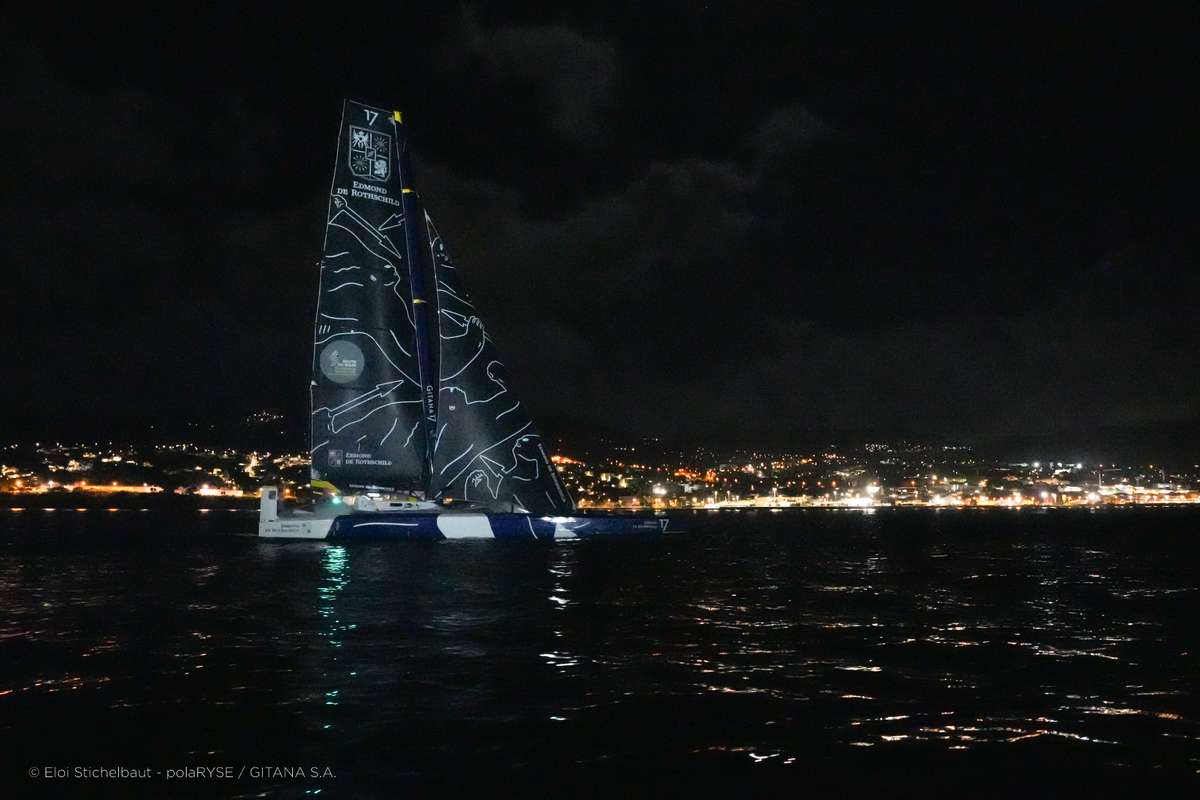
The OSCAR camera system, he says, has been excellent for spotting boats and anything sitting proud of the surface. The original promise was more ambitious: to pick up objects in that awkward band where the water meets the air. "But that doesn't work."
That's precisely where the nasties live: semi-submerged containers, logs, drifting weather buoys (some dropped by the sailors themselves) and sea life. "Today no system exists," Caudrelier says. The teams are pooling money and leaning on industry to find one.
For marine life, there's at least a partial answer. Gitana's daggerboard carries an emitter that broadcasts deterrent frequencies, some resembling a ship's propeller, others above human hearing, the same kit used on drift nets. It isn't perfect, but he believes collisions are down thanks to this imperfect technology.
Gitana has had its share of mystery hits: a badly damaged foil, a rudder, another rudder broken by what was probably a hefty piece of wood. Which is why the team deliberately builds its appendages heavier than they strictly need to be. "If you have a light rudder and you don't finish the race with it, you lose."
He's also careful to keep it in proportion. Caudrelier trained in the merchant navy, and remembers ships docking with a whale wrapped around the bow bulb. A handful of racing yachts aren't the main problem, he says. The fix has to work for the whole shipping industry.
Capsize: the risk you mustn't forget
Ask him whether he worries about capsize and you get an unusually candid answer. "Not enough, sometimes."
The paradox is that you have to trust the safety systems, or you'd never sleep. The pilot can bear away to depower; the sheets can dump automatically. But a multihull is still a multihull.
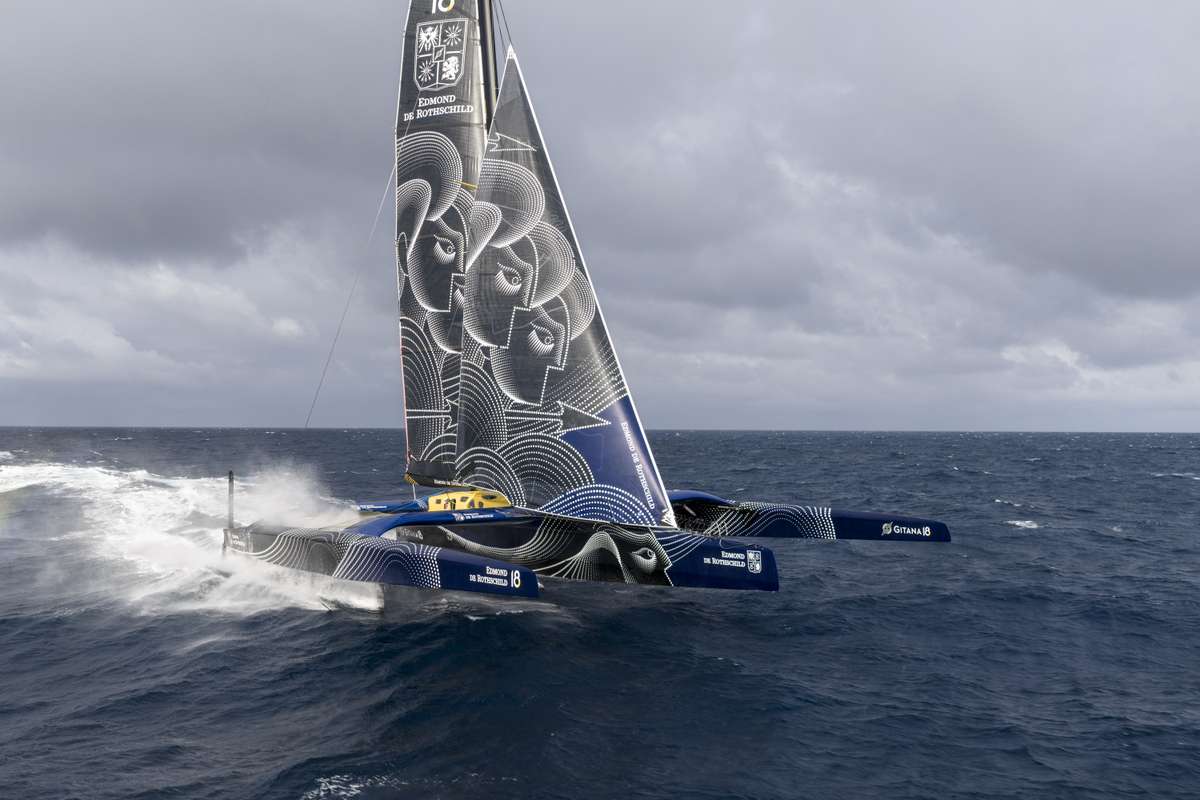
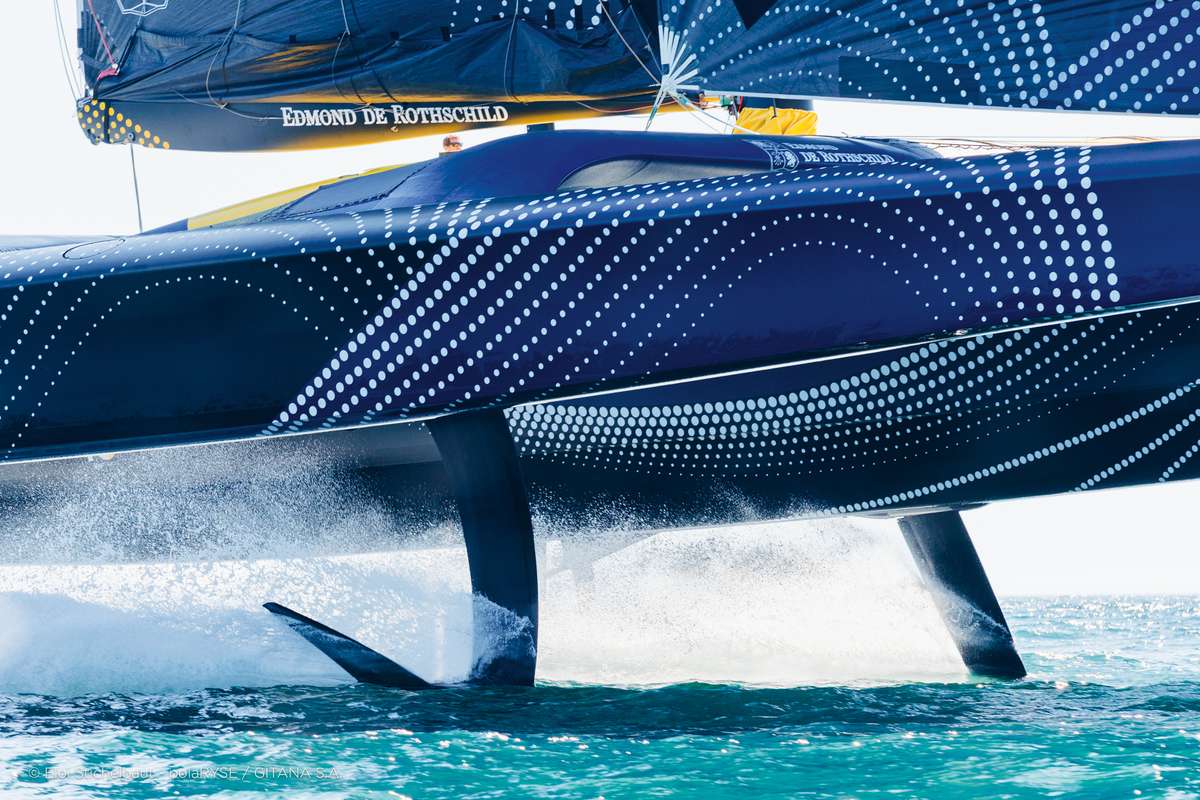
The good news is that foiling has changed the risk profile. On the old "Archimedean" boats (skimming, but not flying, and without T-rudders), the classic way to go over was a nosedive downwind in big waves. "When the boat wants to nosedive, the T-rudder holds you back," he explains.
Flying also keeps the boat flat, even upwind. That means much more reliable safety margins. Caudrelier sets an alarm at 14 degrees of heel and the mainsheet releases automatically at 16. On the older boats, which sailed upwind at 15 or 16 degrees anyway, the trigger had to sit at 20 to 25.
The new autopilot helps too. The old "brain" was essentially reactive, the same core as 20 years ago. Gitana's new one, developed with new partner Weploy Science (WDS), carries a physical model of the boat, so it can anticipate what a course change will do. "It's like a helmsman," he says.
One tack, two gybes
Then there's the sheer graft. I reminded him of Cyril Dardashti's line that Lionel Lemonchois won his Rhum with one tack and two gybes. Caudrelier needed something like 17 manoeuvres in 2022, and certainly hopes for fewer this time.
Tacks are manageable. The team has worked hard on foil handling, and he can drop a foil in a minute or two where others take 20. Done well, a tack takes 10 to 15 minutes. Gybes are slower: bear away gently, then grind in around 20 metres of sheet. Flying manoeuvres, up on the foil? Not solo, and not even with a crew yet.
Sail changes are the real horror. Hoisting the G0 or G1 furlers is "nearly an hour of grinding". So sometimes he'll skip a windshift deliberately. "We can't use every wind shift, and sometimes that's a lot of frustration."
The nightmare scenario is a broken furling line. Forget a closed jammer while you furl, chafe the line, and you could be wrestling 400 square metres of sail onto the nets by yourself. "Imagine you have a problem like that in a big storm, it's a disaster."
For repairs, the shore team has prepared PowerPoint guides with photos of every part, and live video calls help. But some jobs are close to impossible alone. Changing a mainsail batten needs two or three people on a loft floor. François Gabart once managed it at sea. "I honestly don't know how he did it."
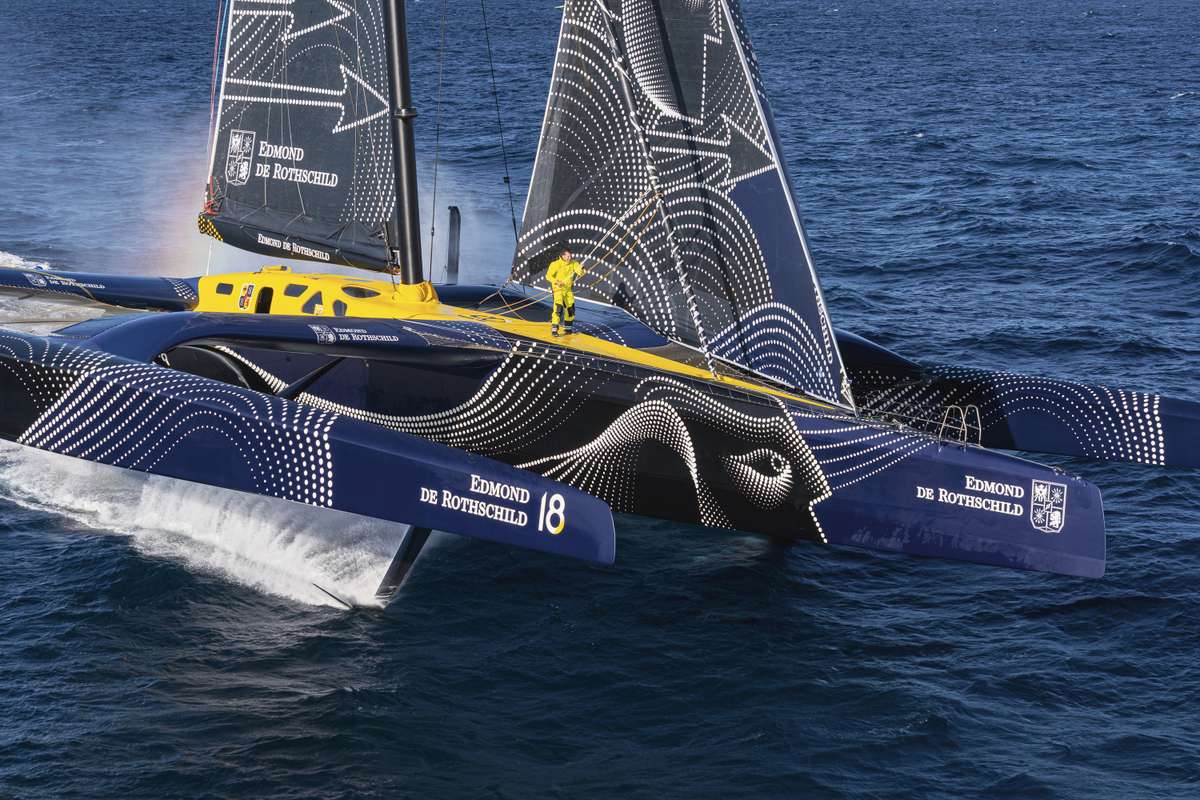
And fear?
I asked whether he simply lacks the fear gene. Not at all, he says. He loves extreme sports but isn't brilliant at them because he gets scared. Most good offshore sailors he knows are the same.
His comparison, inevitably, is Formula 1: the cars are no slower than 25 years ago, but halos and better brakes make them far safer. "We don't say, 'I'm going to do 40 knots and see what happens,'" he says. "I know what's going to happen if I go over 40 knots."
But he admits there are moments. A storm, a damaged furler, a black cloud bearing down. Or a big wave, "and you don't know what's going to happen at the bottom".
Topics
Articles You Might Be Interested in
Who’s hurting and who’s leading 24 hours into the Route du Rhum
The sweeper of the Atlantic
How Gitana 18’s skipper learned to sleep (Pt. 4/6)
Loïck Peyron on the night Fujifilm fell apart
Why Gitana 18 is in the hands of a Figaro man, not an Olympian (Pt. 3/6)
Route du Rhum runners and riders: Vintage Mono
From Tabarly to Gitana 18: why France goes mad for solo sailing (Pt. 2/6)



Member Discussion