
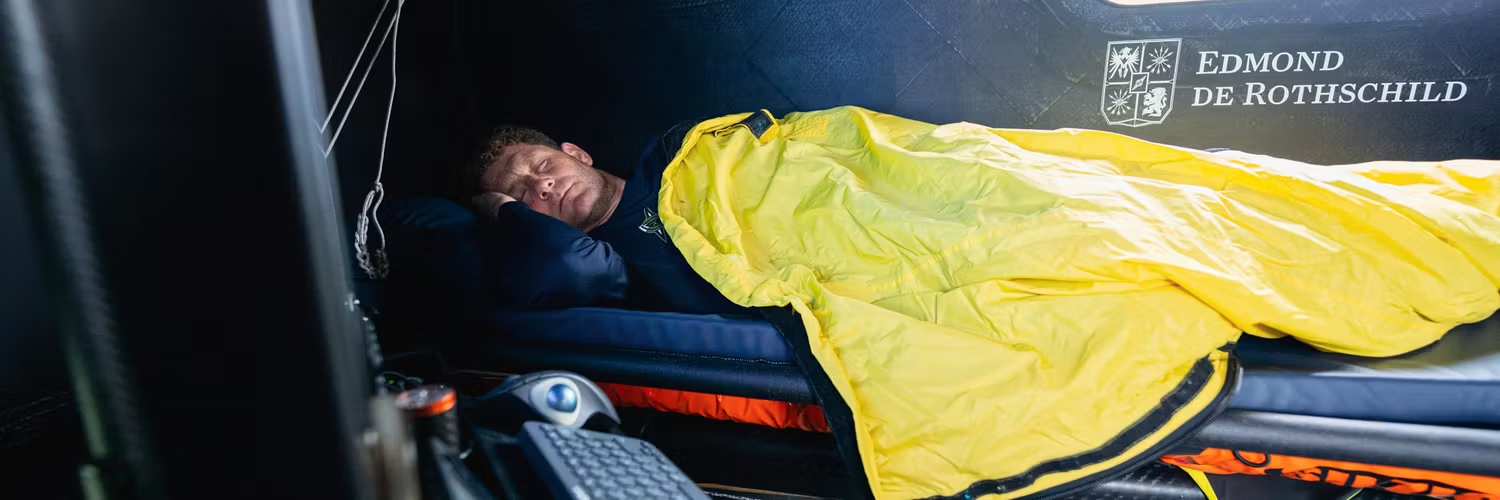
How Gitana 18’s skipper learned to sleep (Pt. 4/6)

Some 20 years ago, Charles Caudrelier was leading a three-day Figaro leg when his autopilot packed up. Young, strong and leading, he made the call plenty of us would have made. "I don't care, I'm going to helm."
By the last night he couldn't steer a straight line. The second-placed boat slipped past, and Caudrelier locked onto its masthead light. "I thought, 'OK, easy, I'll follow this light.' I didn't realise it was my opponent." Then he lost the light. Another boat went by. He was, he reckons, about 40 degrees off course and had no idea.
The rudder was juddering so badly he radioed the race committee to say he was about to lose it. Hours later, slightly more lucid, he found the culprit: a huge mooring line wrapped around it.
Then came the hallucinations. The spinnaker lying in the cockpit kept turning into a person. "I also remember I was steering right, left, and I was dreaming I was on a horse in a forest, avoiding trees," he says. "You know you're not good, but you don't come back."
I suggested it sounded like taking drugs without the drugs. "Yes, probably something like that. But when you're there, you lose the race." He finished that leg eighth.
The red zone
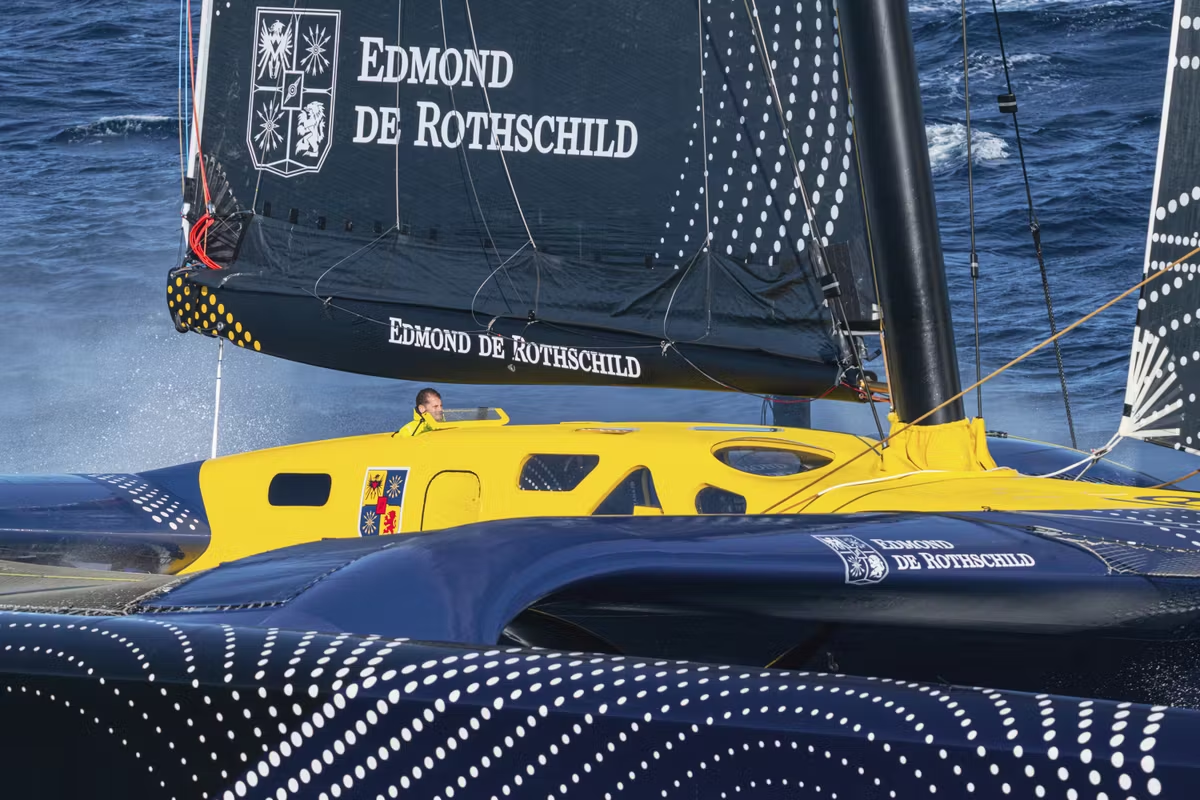
No surprise, then, that sleep is now treated at Gitana as a performance discipline in its own right. Caudrelier has worked with doctors and sleep specialists, recording his sleep ashore and at sea with a hairnet of sensors.
The output tells him when his body most wants to sleep and how long his cycles run. He's a "big sleeper", apparently, so a useful power nap is nearer 20 minutes than 12.
The rule of thumb he works to is four to five hours in every 24. Drop below four and the brain starts to go. "We don't have a big brain. We're only sailors!" he laughs. "When you're in what we call the red zone, you're at probably 20 or 25% of your capacity, which makes you make big mistakes."
Watch any Route du Rhum tracker, he says, and you'll see it play out. Two days of tight racing, then on the third or fourth night someone does something daft. "When you watch your race later you say, 'It's not possible. Why did I go alone to the side when I just had to control?'"
His Rhum strategy is simple. The 2022 race was like a long Figaro leg, with naps of 30 or 40 minutes at most. "As soon as the boat is on the right tack, in the right direction, I have no manoeuvre and the boat is fast, go to sleep," he says. Bank it while you can, because the weather won't always let you.
Asleep in two minutes
The theory is the easy bit. The doctor may say the ideal window is 1am to 3am, but the weather doesn't pay any attention to the doctor's report. And as Caudrelier points out, this is the only sport where you're expected to nap in the middle of the match.
The real skill is falling asleep fast. Burn 15 minutes of a 20-minute window lying awake, listening to the water, and you've wasted it.
One solution came from freediving, a lifelong obsession. Caudrelier dived with the French record holder Arnaud Jerald, who taught him to slow his heart rate before a dive. Caudrelier saw the crossover immediately.
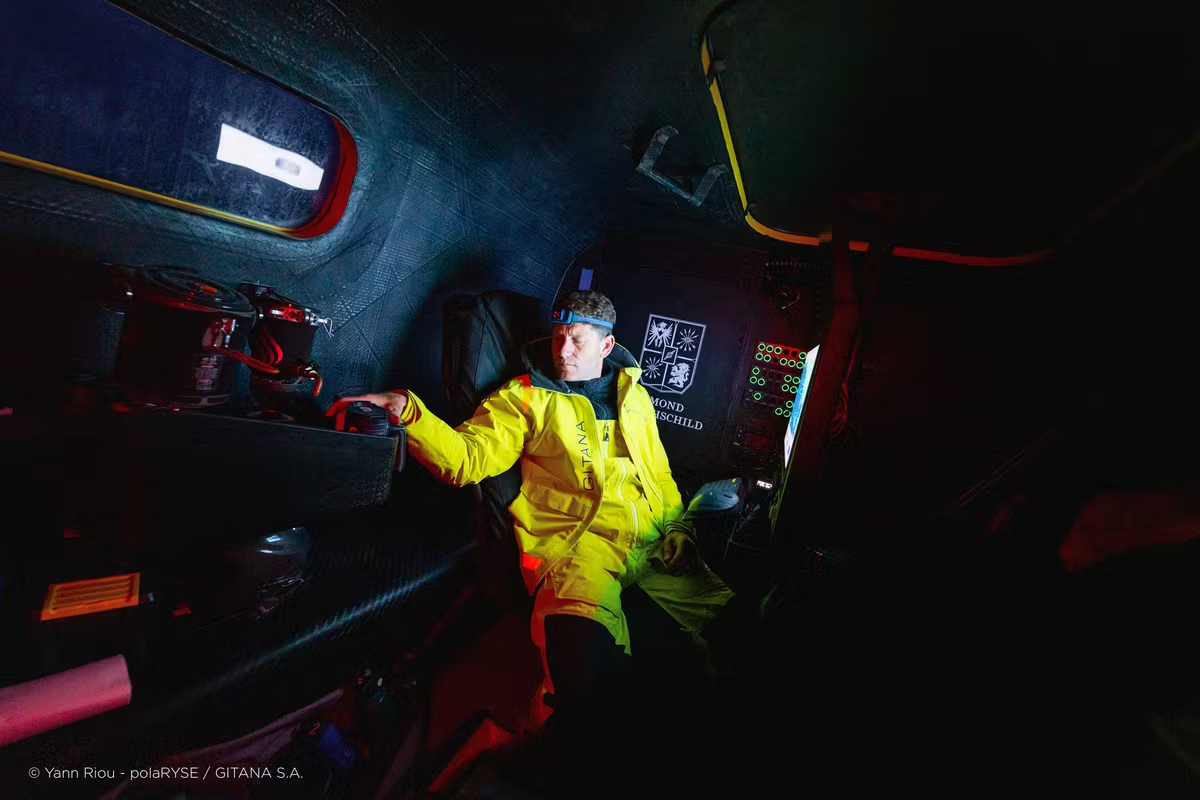
His routine now: a muscle-by-muscle body scan from the feet up, a calming image, then square breathing. "That brings my heart rate back down, and I'm able to fall asleep very quickly, like two minutes."
No music; it keeps his brain ticking. No noise-cancelling headphones either, because they cost mental energy and he wants to hear the boat. Instead, there are alarms on almost everything. "If the wind drops by four knots, wake me up. If the boat speed, or the percentage of the polar, drops by 10 percent, wake me up."
And there's the mattress: about eight kilos of it, designed to lock him in place as the boat lurches. A few years ago that would have been unthinkable on a weight-obsessed Ultim. "But OK, this is for performance."
Fish curry and an English breakfast
Food got the same rethink. Freeze-dried rations are light, and on the Volvo Ocean Race that mattered. But Caudrelier found he simply didn't eat them. "If I have no pleasure, I don't eat."
On a solo boat the weight difference to proper food is perhaps 20 kilos, even round the world. So now it's ready-cooked pouches dropped into boiling water for a minute, eaten at fixed times like on land.
The day starts with a full English at sunrise – "the only English food I love is the breakfast!" – then something light at midday and a heavier dinner. His favourite is fish curry with rice. Between meals, it's long-life cheese and fruit that keeps, including grapefruit.
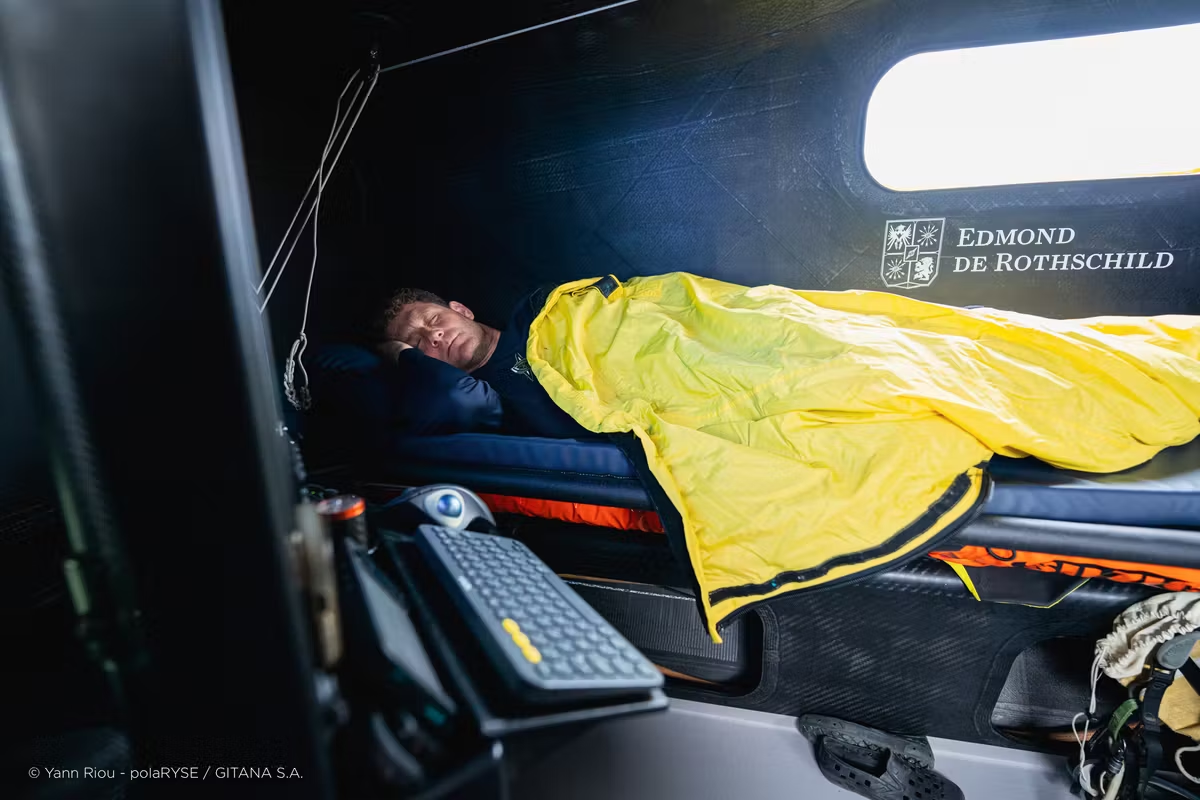
Hot water comes from a JetBoil with a nozzle, so he never pours from a pan in a seaway. And Gitana 18's galley is a big step up from its predecessor's. "Before, I was eating on my knees; cooking on my knees was a disaster," he says. Now he sits in his chair to cook. A small thing, maybe. But on day five of a transatlantic, small things decide races.
Topics
Articles You Might Be Interested in
Who’s hurting and who’s leading 24 hours into the Route du Rhum
The sweeper of the Atlantic
Things that go bump in the night: Gitana 18 skipper Caudrelier on risk at 40 knots (Pt. 5/6)
Loïck Peyron on the night Fujifilm fell apart
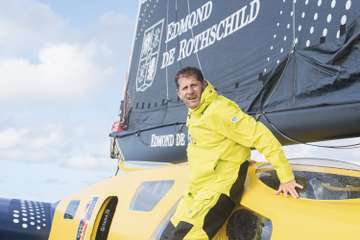
Why Gitana 18 is in the hands of a Figaro man, not an Olympian (Pt. 3/6)
Route du Rhum runners and riders: Vintage Mono
From Tabarly to Gitana 18: why France goes mad for solo sailing (Pt. 2/6)



Member Discussion