
From Tabarly to Gitana 18: why France goes mad for solo sailing (Pt. 2/6)

If you're reading this in Auckland, Annapolis or Cowes, you probably think the Vendée Globe is the summit of solo sailing. Go to Saint-Malo in early November and you may change your mind.
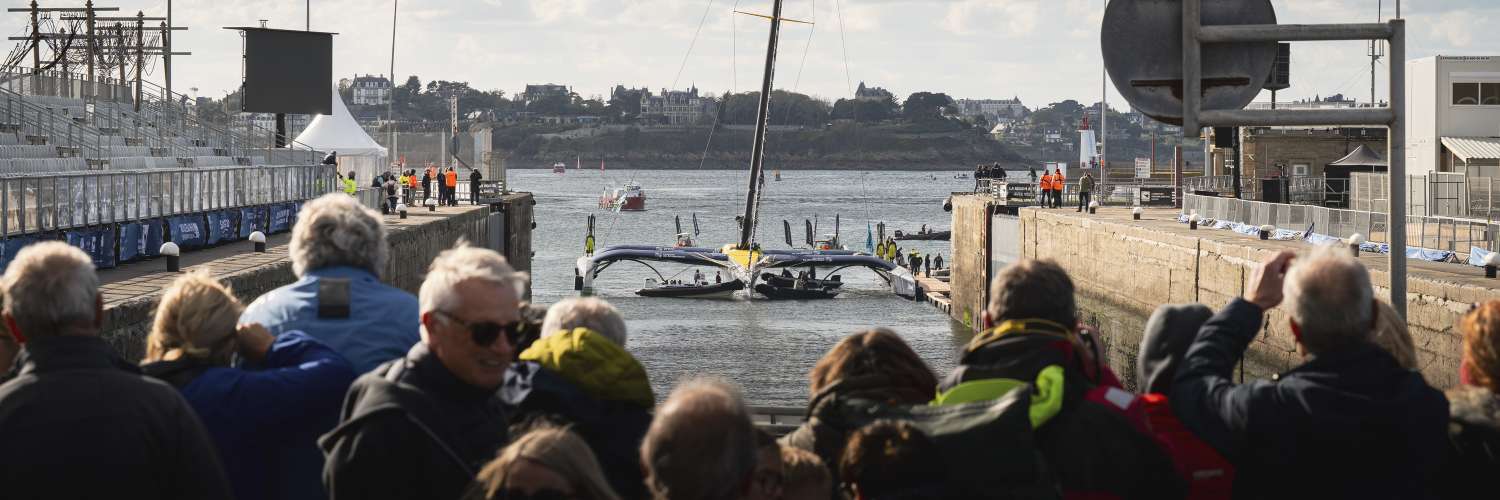
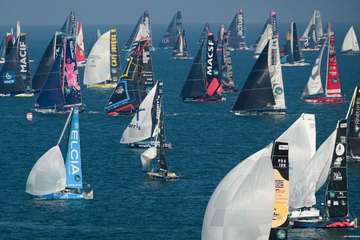
Some 2 million people turn up for the start of the Route du Rhum, where 118 solo sailors will be departing on 1 November. And at the finish line some 3,500 nautical miles later, Guadeloupe more or less stops what it's doing to welcome them in.
"The island lives for the finish of the Route du Rhum, which makes crossing the finish line completely crazy," says Gitana 18 skipper Charles Caudrelier. "It's just magic."
Any boat you like
Part of the appeal is the purity of the format. The Vendée is a one-design-ish affair for IMOCAs. The Rhum is open. Turn up with whatever you've got, and first across the line wins.
"Imagine that you can choose any kind of boat you want," Caudrelier tells me. "So today it's the multihull that's the best, for sure: the flying multihull." That's why the eight giant Ultims sit at the top of a fleet that also includes Class40s, IMOCAs and an assortment of amateurs on boats that would fit inside an Ultim's cockpit.
Caudrelier also loves the water itself. His 10 years on the Volvo took him across almost every ocean, yet he rates the Atlantic as the most interesting of them for strategy and forecasting. A 3,500-mile sprint where the weather routing is a puzzle rather than a procession? That's his idea of fun.
It all goes back to Tabarly
I asked both Caudrelier and the Gitana team boss, Cyril Dardashti, the question I've been asking French sailors for years. Why are offshore sailors household names in France, when the rest of us couldn't pick one out of a line-up? Both gave the same answer: Éric Tabarly.
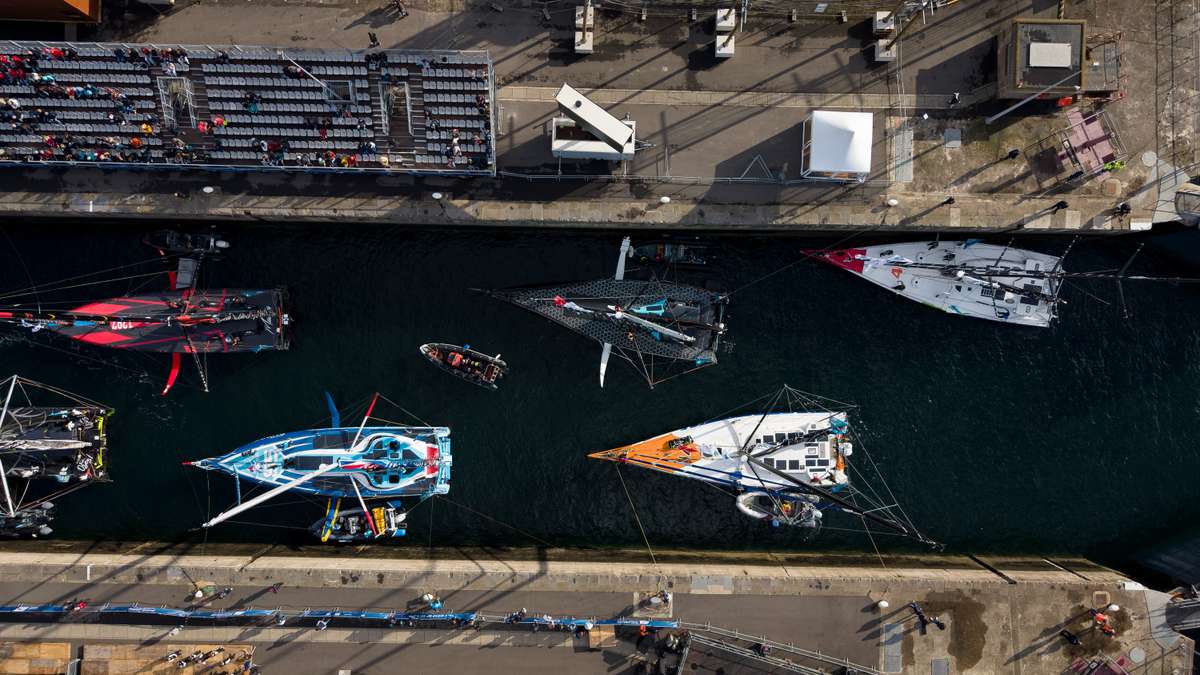
"Éric Tabarly is a legend; he's as famous as a president or a very famous football player," says Caudrelier. "He kicked the arse of the Brits! He went down the Champs-Élysées as a superstar, something you only do today when you win the football World Cup."
As a Brit, reluctantly I'll take that on the chin. Dardashti makes the same point with a touch more diplomacy. Sailing was thought to belong to the Anglo-Saxon world, he says, until Tabarly won that solo transatlantic ahead of the English. He subsequently met de Gaulle. He moved in the same circles as Brigitte Bardot. "That admiration is something I think all French people kept inside them," says Dardashti.
Then came the disciples: Philippe Poupon, Jean Le Cam and others who had sailed with Tabarly and wanted to be Tabarly. Then the sponsors. Then the Route du Rhum and the Vendée Globe, which turned the four-year cycle into something like a sporting Olympiad.
"It's actually the Olympic Games for us," says Caudrelier. Dardashti uses exactly the same phrase. A solo race every four years that represents, in his words, "a whole chapter in the history of offshore racing in France".
Sailing Valley
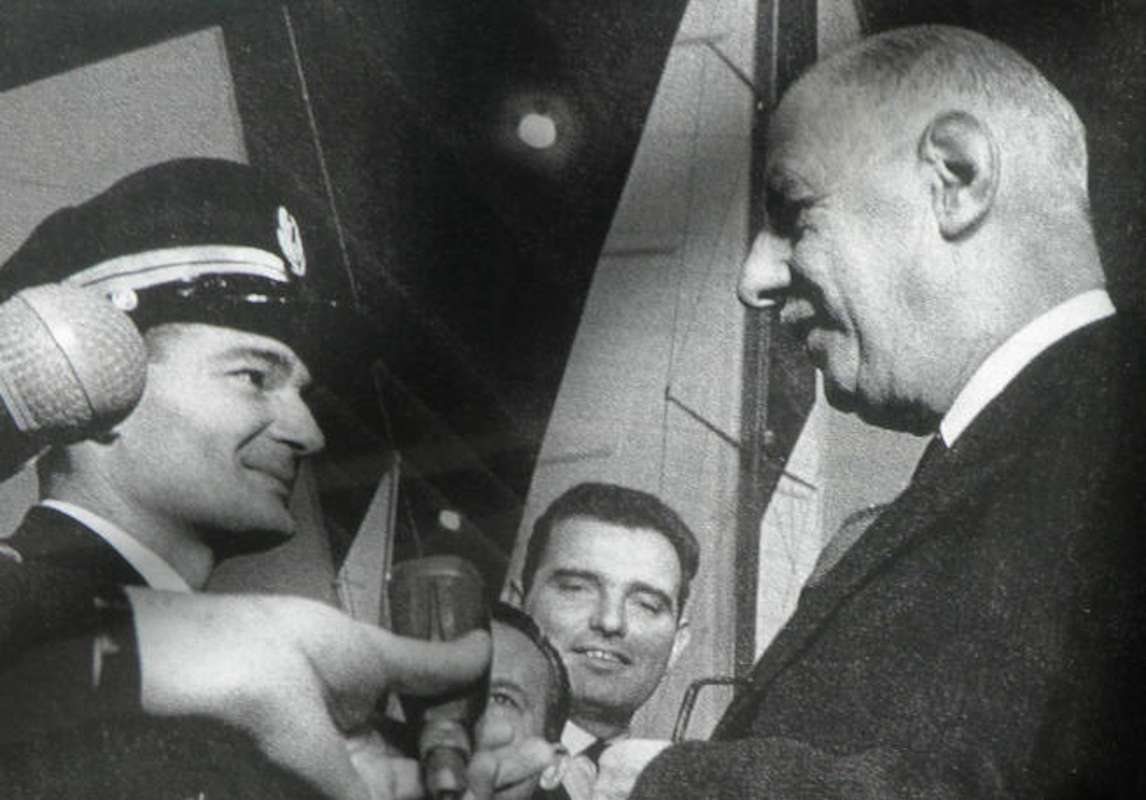
The result is Lorient, where both Gitana and Caudrelier live, and where you can walk along the quayside past Class40s, IMOCAs, Ocean Fifties and Ultims in a single morning. Dardashti calls it the "Sailing Valley", and it's hard to argue.
"What you see in Lorient you don't see anywhere else in the world, not even in New Zealand, which is the country of sailing," says Caudrelier. "There are probably more people sailing in New Zealand than in France, but here single-handed racing is very, very popular."
There's demand to match. There are 40 IMOCAs at the start of the Vendée, he points out, and people fighting to get in because there isn't room for everyone.
The long wait
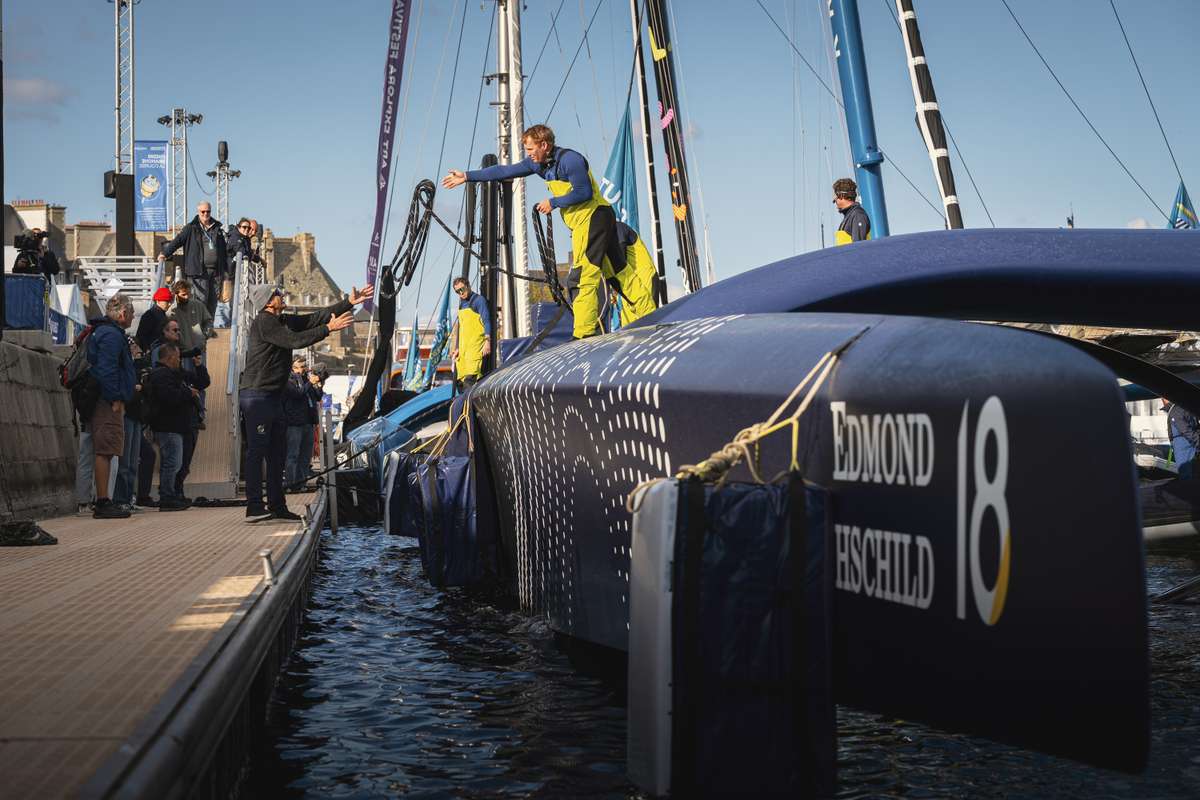
Which makes Caudrelier's own Rhum story slightly poignant. He decided he would do the race when he was 15. "I remember saying, 'I hope I'll do it before I get too old, like 30.'"
He didn't make the start line until 2022, by which time he was 48. In between, he watched his best mates go off to Guadeloupe while he stayed ashore. "It was a big drama for me," he says.
What kept him? "No money, no project." He was hunting for a Vendée budget when Franck Cammas pulled him into the Volvo Ocean Race, and then Dongfeng made him an offer he couldn't refuse. After 10 years and two Volvo wins, the solo dream was on the back burner.
No regrets, though. "Sometimes you don't decide," he says. "If today I'm the skipper, the lucky guy who is skipper of Gitana, it's because of the Volvo Ocean Race."
And when he finally got to the Rhum? First try, first win, new record. Some things are worth waiting for. When the first Rhum was sailed in 1978, Dardashti reminds me, the winning crossing took around 23 days. Caudrelier did it in under seven. Tabarly would surely have approved.
Topics
Articles You Might Be Interested in
Who’s hurting and who’s leading 24 hours into the Route du Rhum
The sweeper of the Atlantic
Things that go bump in the night: Gitana 18 skipper Caudrelier on risk at 40 knots (Pt. 5/6)
How Gitana 18’s skipper learned to sleep (Pt. 4/6)
Loïck Peyron on the night Fujifilm fell apart
Why Gitana 18 is in the hands of a Figaro man, not an Olympian (Pt. 3/6)
Route du Rhum runners and riders: Vintage Mono



Member Discussion