
Ferrari Hypersail’s people and plan for 2027 (Pt. 7/7)

Project leader Enrico Voltolini and CTO Matteo Lanzavecchia on crew, records, races and why Ferrari built just one boat. Plus the road to Livorno.
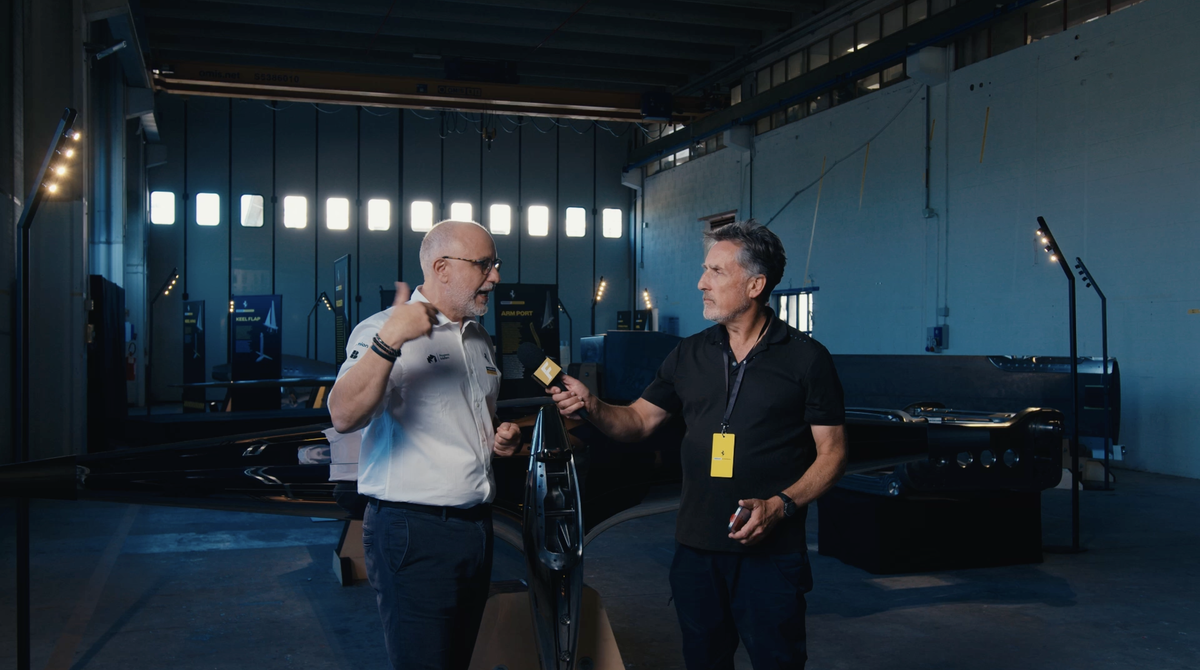
By the end of the day, the questions had moved from the boat to the people. When I was at the construction yard in Pisa, I spoke to two men key to the project: Enrico Voltolini, the team director, and Matteo Lanzavecchia, the Chief Technology Officer.
A crew with vision
I asked Voltolini how he handles the responsibility of something this big. He didn't play it down. The boat is a completely new concept, he said, and bringing it safely into the ocean will be completely new too.
What matters most to him is people. Experience is important, but it is not enough. "They need a vision," he said. "It's not a maxi, it's not an America's Cup boat, it's not an IMOCA 60, and it's not a multihull 100."
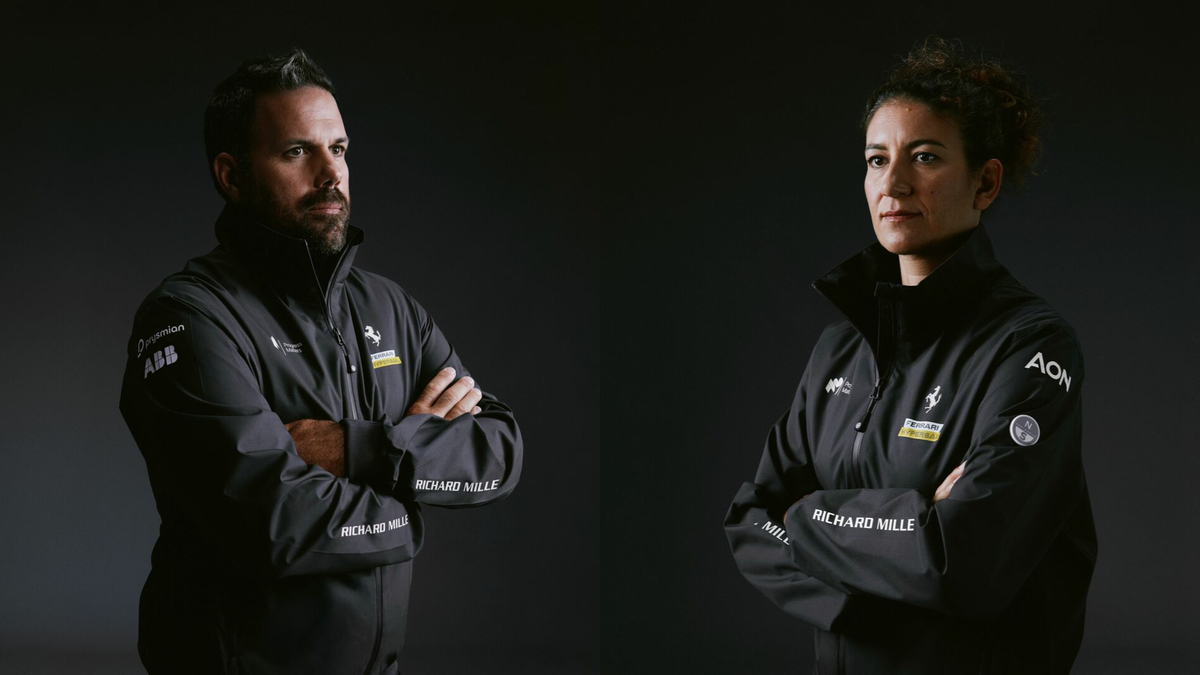
The first two members of the sailing team are Shannon Falcone, many time America's Cup competitor and offshore racing veteran along with Giulia Conti, former Olympic competitor and winning skipper of the Women's America's Cup in Barcelona 2024. Voltolini chose them for both their skill and their vision. The rest of the crew list should be announced at the end of November.
Will Voltolini be skipper? No – and he thinks the idea is outdated. "I don't think we'll have a skipper. We have a crew," he said. Many people will steer and fly the boat, taking turns while others sleep. For legal and safety purposes there will be a boat captain, and he has names in mind. But would he like to be on board for a record? "Yes, for sure. I'll try to be there."
The ultimate goal: the Jules Verne
There is no doubt about the target. "The goal of the project is to beat the record," Voltolini said – the Jules Verne Trophy for the fastest non-stop lap of the planet under sail. The second goal is technology transfer between Ferrari's car and sailing worlds.
Think about what that record means. Leave aside the International Space Station, which circles the Earth in about 90 minutes. Leave aside Steve Fossett's 67-hour flight round the world in 2005. A crew that breaks the Jules Verne record becomes the fastest people to travel non-stop around the planet's surface. If Ferrari Hypersail does it, it will do it with no fuel on board at all.
But the boat will take part in other races too. Voltolini listed the transatlantic races, the Rolex Sydney Hobart, the Rolex Fastnet Race and Cape to Rio, as well as 24-hour and transatlantic records. Early record attempts could happen in the Mediterranean. The boat will carry an IRC rating, and Voltolini plans to start talks with the rating authorities in the coming weeks.
And the moment he is most looking forward to? "Obviously the first take-off." From his America's Cup days, he knows the feeling of the water accelerating under the boat as it lifts. "It is something that you cannot model in the sim."
A laboratory, not a product line
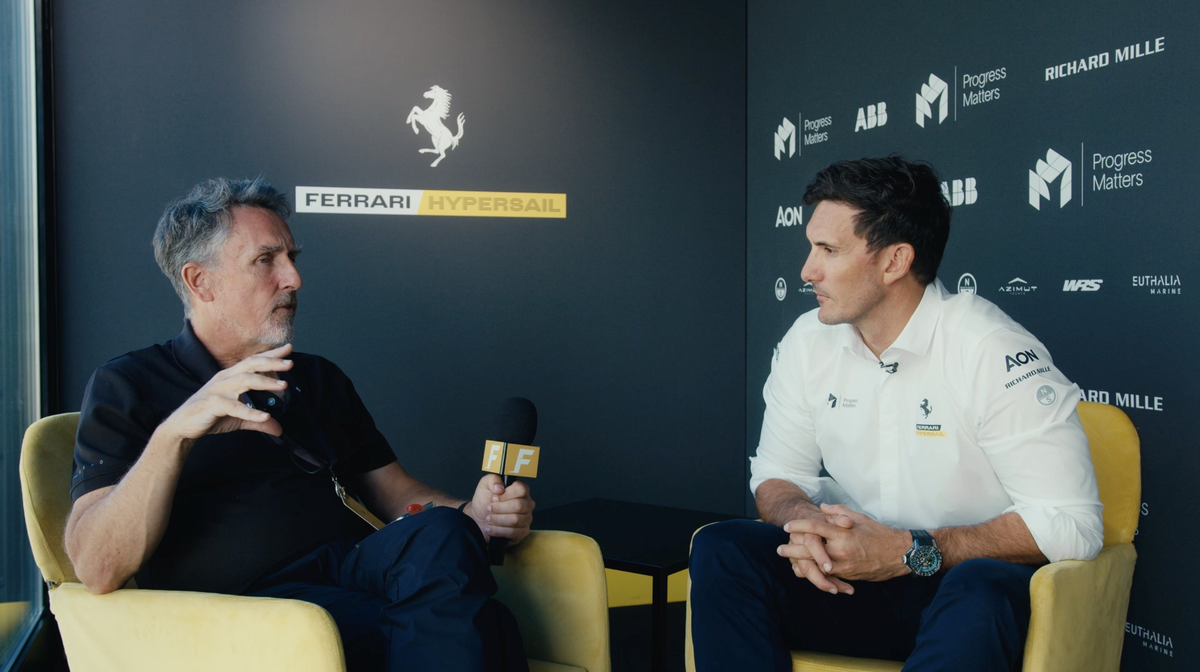
Lanzavecchia has a double job. He spends 60 to 70% of his time as head of vehicle engineering for Ferrari's road cars. He is there to make sure ideas flow both ways.
He described Hypersail as “a sort of technological laboratory”. There are no plans for a second boat, and none to sell this one. Ferrari’s goal is to prove the ideas work. Who gains more, the cars or the boat? “It’s just a winning situation,” he said. The boat has borrowed Ferrari’s simulation-led approach, built up over 25 years, and its winch-by-wire system derives from the suspension of the Ferrari Purosangue. In return, the cars get new ideas. That same winch-by-wire technology has been used to develop the by-wire gearbox controls for the upcoming Ferrari 12Cilindri Manuale.
First, though, he wants proof that the technology works. "We will be very happy if we demonstrated that all the technology that we put in place is working," he said. If a flying monohull works, it will evolve – just like a car.
The project now holds more than 20 patents. Which is he proudest of? The winch-by-wire, he said, without hesitation.
The road to the first flight
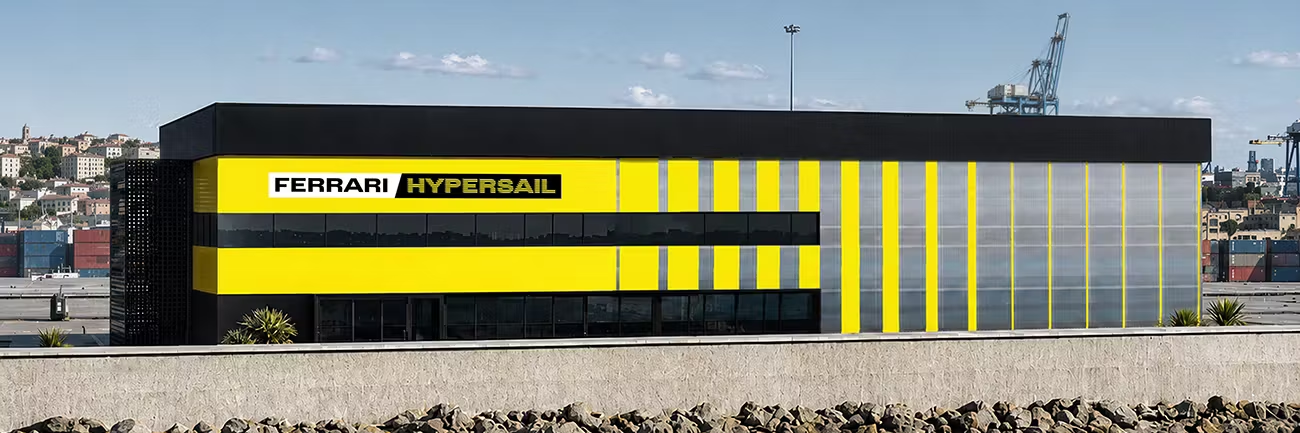
So what happens next? The team is now finishing the electronic and hydraulic installation. Then the boat leaves Pisa for a new base in Livorno, Tuscany. Construction there began at the end of July and should be complete by the end of 2026.
The base is something Voltolini fought for. “I really pushed to have a base so everyone can work together,” he said. Until now the project has been spread out, with Guillaume Verdier’s design office in Vannes, the engineers in Maranello and the builders here in the Pisa yard. “I don’t want to say it was a problem, but it was difficult,” he admitted. In Livorno, sailors, shore team, designers and mechatronics specialists will finally sit under one roof.
The location was no accident. “We chose Livorno because it’s very close to Maranello,” Voltolini said. The harbour is also deep enough for a keel that draws 9.5 metres, and the Tyrrhenian Sea offers the full range of conditions a new boat needs. “We can have a light wind, strong wind, big waves,” he said. “If we move to the north of Corsica in the Mistral days, it can be a very tough condition, so I think it’s a perfect location for a boat like that.”
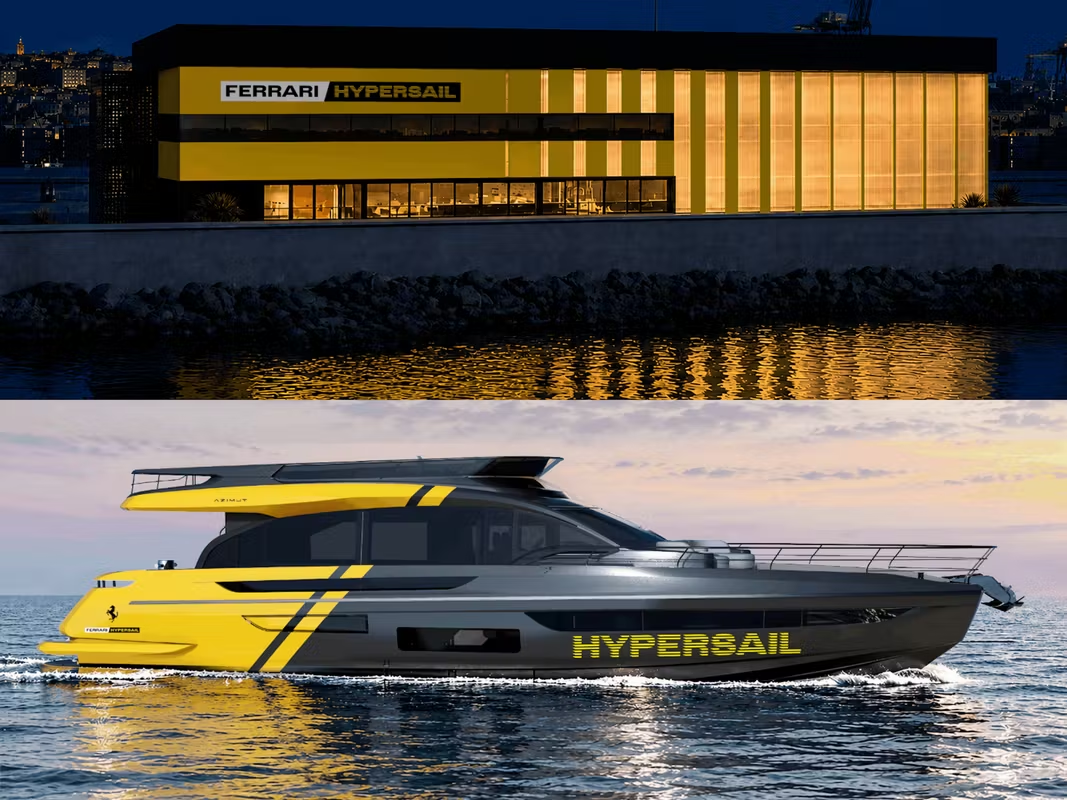
The mast and sails arrive by the end of November. The appendages will be fitted at Livorno. The boat is due to splash at the end of March 2027. In April come structural and tow tests, without the mast, to validate the flight controller. Then the mast goes back in. If all goes well, the sails go up from mid-April. After that comes a long period of testing and learning. The team reckons it will take most of 2027.
Following this project requires patience from everybody, fans of The Foil included! But seeing Hypersail move through its various levels of development will be one of the most fascinating stories of our sailing generation.
Topics
Articles You Might Be Interested in
Who’s hurting and who’s leading 24 hours into the Route du Rhum
The sweeper of the Atlantic
Things that go bump in the night: Gitana 18 skipper Caudrelier on risk at 40 knots (Pt. 5/6)
How Gitana 18’s skipper learned to sleep (Pt. 4/6)
Loïck Peyron on the night Fujifilm fell apart
Why Gitana 18 is in the hands of a Figaro man, not an Olympian (Pt. 3/6)
Route du Rhum runners and riders: Vintage Mono
From Tabarly to Gitana 18: why France goes mad for solo sailing (Pt. 2/6)



Member Discussion